Mrs S likes her holiday sunshine guaranteed, making summer UK touring a bit of a hard sell. In a spirit of harmony and diplomacy, I’ve always agreed to touring in a campervan to Europe, to those places where opening the curtains in the morning is almost certain to leave you temporarily blinded, so bright is the sunlight.
I love Euro touring. The driving is easy, the sunshine incessant, the beaches just sensational and the cultures fascinating. There’s a real spirit of adventure as you board the ferry or Eurotunnel, and once at your location, the standard of the campsites is excellent, too.
All that said, Euro-freedom does have its price, and that comes in the form of some additional planning and admin. To help you get the most from your European tours in a campervan, I’ll be sharing my top tips I’ve developed from years of travelling in Europe. I’ve learned some of them the hard way, so you don’t have to!
One thing to highlight – if you are planning to visit an aire, you will need to have full facilities to use them. This is because they tend not to have toilet blocks or any kind of facility that some campervanners rely on.
If you’ve not quite settled on where to pitch up, don’t miss our selection of the best campervan sites in France either, with beautiful scenery and plenty to see in the area of each one.
Travelling around Europe in a campervan
Before you set off
Love it or loathe it, Brexit has changed the rules for campervan owners who are thinking of travelling to Europe. Here’s what you need to know.
1. First up, passports. You’ll want at least six months’ validity left on yours, or you could find yourself being turned away faster than a British tourist who asks for their steak tartare to be well-done in a Parisian restaurant!
2. Your vehicle now needs to display a UK (not GB) sticker, plus you’ll need your V5C logbook and proof of insurance. And if you are hiring a campervan, you will also need a VE 103 certificate.
3. For those of you dreaming of endless European road trips, bad news: you can’t stay longer than 90 days in any 180-day period. That means leaving the entire EU, not just your chosen country.
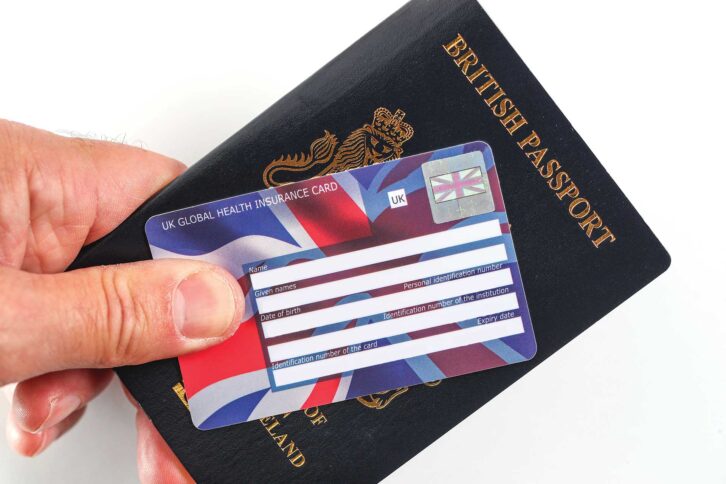
4. Healthwise, you’ll need a free UK Global Health Insurance Card (GHIC), allowing reciprocal free medical care in most European countries.
The quickest way to apply for the card is online at nhs.uk/ghic. Note that other websites offer to arrange GHICs, but charge for the service. Avoid!
Alternatively, you could call 0300 330 1350 from the UK or +44 191 279 0575 from abroad. Lines are open Monday to Friday 8am to 6pm, and Saturday 9am to 3pm (UK time).
5. Better still, take out travel insurance as well – especially if you suffer from any existing medical conditions, which must be disclosed. The older you get, the more your health insurance is likely to cost, so it makes sense to shop around.
6. Mobile roaming charges are a mixed bag post-Brexit. Some networks still include free EU roaming, while others will sting you harder than a Spanish jellyfish. Always check before you go.
Last year, for example, my Vodafone mobile was going to cost £60 for two weeks abroad, while the family’s phones cost £20 for a month.
7. Are you a big fan of internet in a campervan? You may find yourself deciding you are going to need Wi-Fi for multiple devices, consider renting a MiFi tablet, which can give web access to a number of devices and might get better service than a phone.
Check out cellhire.co.uk, or look at having a mobile internet system fitted to your vehicle by a specialist company. You could also see how Nigel Donnelly went about adding WiFi to his motorhome for more ideas.
8. For many of us, touring with pets can be one of the most enjoyable elements of ‘van life. However, since Brexit, EU pet passports issued in Britain are no longer valid. Instead, you need to obtain an Animal Health Certificate (AHC) for each trip.
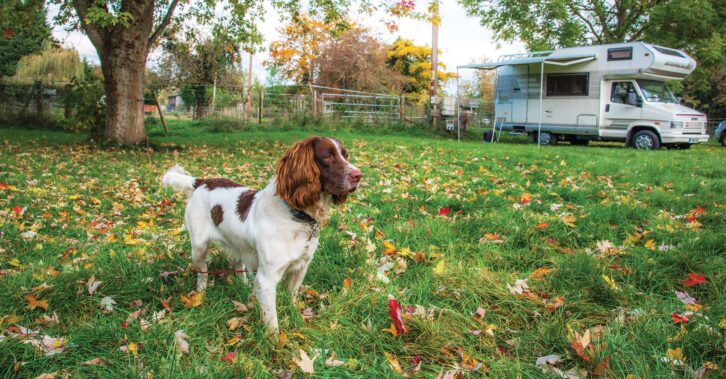
To get the AHC, your pet must be microchipped and receive a rabies jab at least 21 days before travel. You must get your certificate from a vet within 10 days of travelling.
The AHC is time-sensitive, as it is only valid for one trip to the EU, onward travel within the EU, and re-entry to Britain within four months.
Dogs that are accompanying you to Finland, Ireland, Malta or Norway also need tapeworm treatment.
On returning, dogs must be treated for tapeworm 24 to 120 hours before they re-enter Britain. You can find out more at gov.uk/taking-your-pet-abroad.
9. Duty-free is back! Most travellers can bring in £390 of goods, plus 200 cigarettes, four litres of spirits, 18 litres of still wine and 42 litres of beer.
Customs really love checking our vehicle, although I think they are looking for stowaways – or maybe we just look shifty! Check gov.uk/duty-free-goods for details and updates.
10. When you’re touring Europe in a campervan, it can be worth using Google Maps and Streetview for route planning, especially when you are crossing towns and cities and when the approaches to a rural campsite might be challenging.
Relying on a standard sat nav can throw up interesting questions for anyone driving a larger motorhome. Like the time one directed me and a big Adria through a medieval French town with very narrow streets!
11. When hitting the open road across Europe, don’t just think about the fun bits, factor in the costs, too. Fuel and tolls can add up, especially in France, where a blast down péage motorways will set you back more than €100 all the way from north to south – one way!
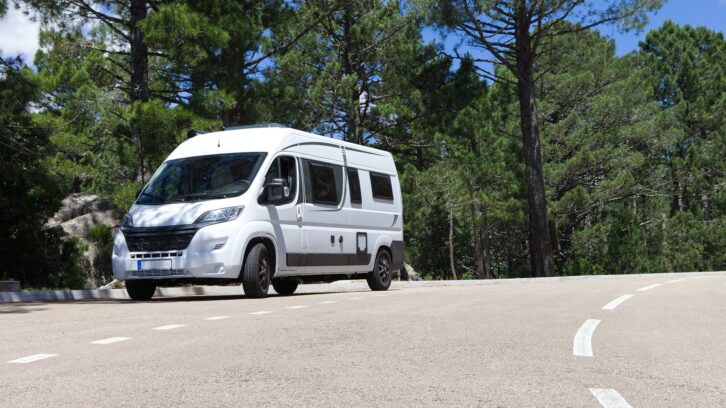
12. Check your insurance before touring Europe in a campervan too. Let the provider know you’re heading abroad, and remember that some insurers require a fire extinguisher to be carried, even for UK trips. If you don’t have one, your cover could be void in case of a fire – and if you need one, don’t miss our best fire extinguisher for a camper van guide.
13. Make sure you have enough gas for your trip. Continental gas bottles don’t fit UK regulators, so if you’re away for a couple of weeks, ensure you have enough gas, or a Continental ‘pigtail’ adaptor. Euro gas cylinders are easy to find at service stations and DIY stores.
14. A rear luggage box is an absolute game-changer – but make sure you don’t overload the rear axle.
15. Leave one or two spare days in your itinerary in case of bad weather.
16. Photograph your travel documents: passport, insurance, GHIC, driver’s licence, breakdown/recovery papers and so on, and keep them somewhere safe, as print-outs or on your phone.
17. Be aware that most home insurance policies don’t cover an empty house for more than 30 days.
18. If you have an old-style paper driving licence, you might consider getting an International Driving permit from a supplying PayPoint shop or selected Post Offices (£5.50).
19. A Green Card is no longer needed for driving in the European Economic Area, but you still need your licence, log book and insurance certificate.
On the road and on site
20. While they’re a little slower, taking a Route Nationale (a single-lane A road) is free and lets you see ‘real’ France.
In addition, there are regular options for patisserie stops, and lovely towns and villages to grab lunch in.
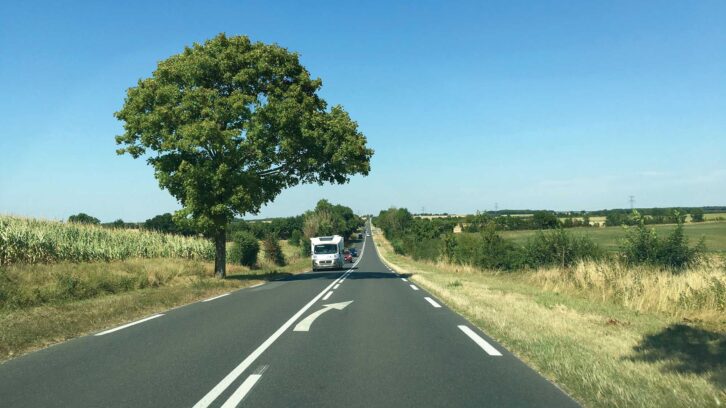
On a long tour, you might need to add an overnighter if you are travelling on these roads – find yourselves a nice rural aire and then just relax!
21. The requirements will vary between countries, but you might need to carry the following items with you:
- First aid kit
- Fire extinguisher
- Spare vehicle bulbs
- One or two warning triangles
- Headlight-beam deflectors (which must be applied)
- A second pair of prescription glasses for driving in Spain
- Fluorescent jackets/vests (within reach, not in the boot)
22. Don’t assume the speed limits when driving in the UK are the same in Europe. In fact, speed limits vary across Europe, and they alter depending on whether you are driving on single-lane roads, dual carriageways or motorways.
Do yourself a favour – check them out before you set off, or you might just get an unwelcome roadside chat with an official in a high-vis.
23. Don’t plan to travel on Bastille Day or Assumption Day in France, unless you really enjoy sitting in gridlocked traffic and watching your ice cream melt. Bank holidays often see epic jams on roads across Europe.
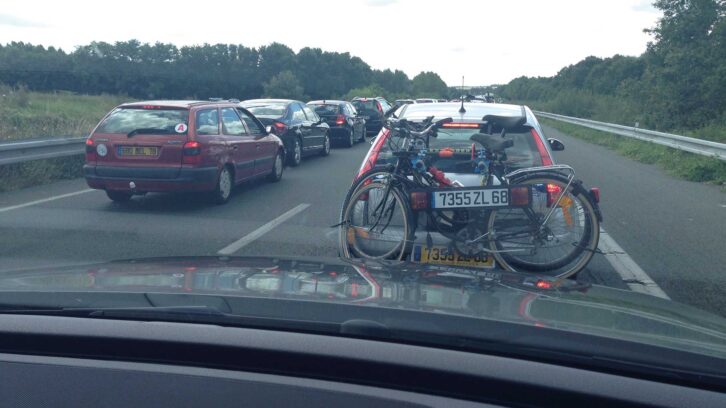
24. French toll roads are great for getting south quickly, but paying for them is another story. Some require payment when you enter, while others operate a ticket-at-the-start, barrier-at-the-end system. Most booths are automated, which is fine unless your card isn’t accepted – then it’s panic mode. Always keep some cash handy just in case.
25. Don’t drive into the bottleneck at the toll-barrier until the vehicle in front of you is clear. If they have an issue, you will be stuck, and forced to reverse out between concrete walls while everyone gets rather impatient.
26. Don’t forget your campervan tyre pressure either – in the UK, we use psi, while on the Continent, everything’s in bar. If you need to check or inflate your tyres, the conversion is 14.5 psi = 1 bar.
27. If you have a protruding item fitted to the rear of your campervan, such as a bike rack, the regulations in Italy and Spain require marker boards to be displayed on the back. These are red and white reflective panels, measuring 50 x 50cm, and yes, you will be fined if you don’t have them.
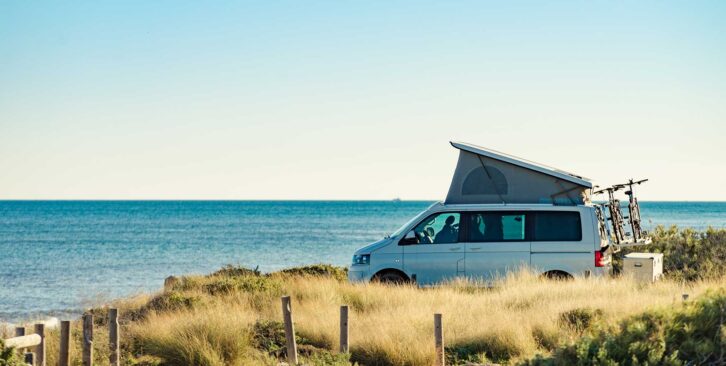
28. If you are travelling on Austrian or Swiss motorways, you must have a windscreen vignette. You can buy this at the border or online before you travel. Again, if you fail to display it, you run the risk of a hefty fine.
29. Rural or town aires are great places to stop – you’ll find thousands of them across France and further afield.
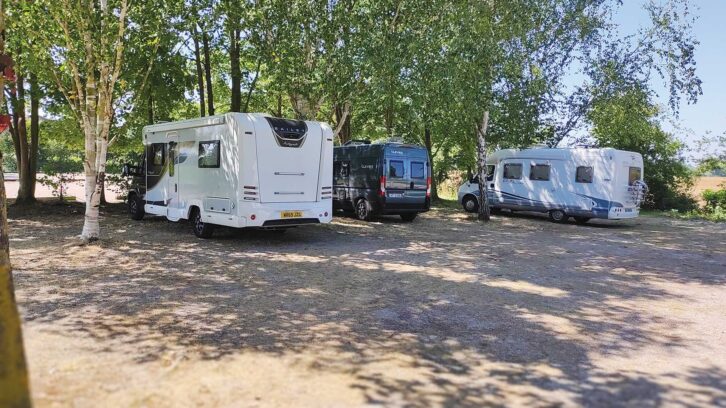
30. Motorway aires are notorious for overnight thefts, and service station leisure vehicle parking areas aren’t 100% safe, either. Find an aire in a nice town or village instead, or a regular campsite.
31. Service station stops are a prime target for opportunist thieves. Never leave your campervan unattended, and keep all valuables hidden away out of sight.
32. UK campervan fuses are very hard to find when you’re touring abroad, so always carry a few spares with you – you’ll thank yourself later.
33. Wild camping is permitted in some European countries, and not others – always check before stopping overnight. If you’re in any doubt, don’t risk it.
34. A good campervan tool kit will also play a part – I’d advise not setting off without these:
- File
- Pliers
- Spanners
- Socket set
- Junior hacksaw
- General-purpose adhesive
- Flathead and Phillips screwdrivers
- Spare screws, nuts, bolts and washers
- Gaffer tape and WD-40
35. Many countries ban radar detectors and spot fines are a common occurrence. Play it safe – always stick to the speed limits and don’t use a detector!
36. Time your 35-minute Eurotunnel trip well, arriving as close to departure as permissible, and your journey to Europe will be seamless, saving an hour or more on a short ferry crossing and four hours on longer sailings to the west.
37. UK campsites usually provide 16A electric hook-ups, but in Europe, many are 10A, 6A or 4A. So you won’t be able to run everything at once. Learn the amps drawn by appliances, so you don’t risk overloading the power supply system.
Breaking up your journey while touring Europe in a campervan
38. Touring in France, we’ve found some great places for making overnight stops. Our favourites are historic Compiègne, if you’re heading south from Calais, and Le Mans or Tours if you’re driving further west after landing at Caen.
39. In Le Mans, we love family-friendly Ernest Inn, at 37 Rue des Ponts Neufs, 72000, in the city centre, for a good dinner after a long day on the road. It’s a relaxed, funky little place, with excellent mid-priced food.
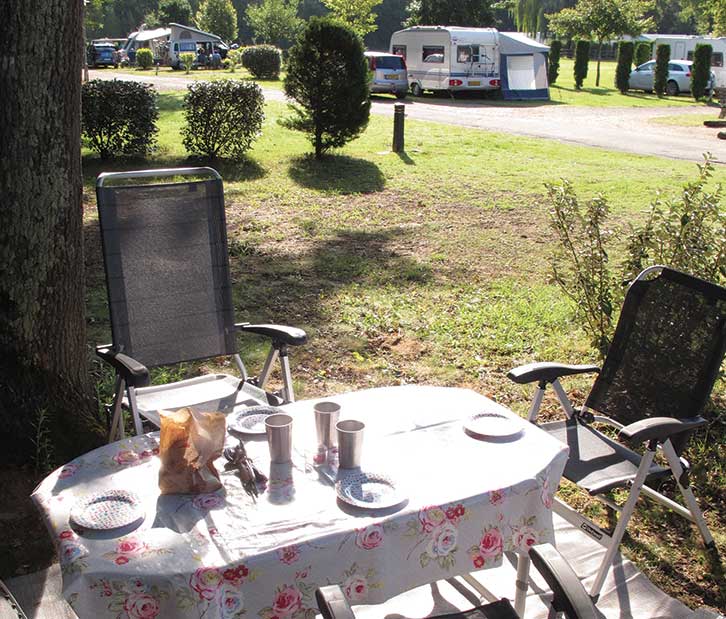
40. A great place to break your journey to south-west France is Camping Les Acacias, in the beautiful city of Tours. The site’s best pitches (64-68) are spacious and grassy. From here, you will be just five minutes away from the A10, with easy access to south and west France.
41. If you have inquisitive children, and you love to be ‘wowed’, Puy du Fou theme park (85590 Les Epesses, France), near Nantes, is unmissable.
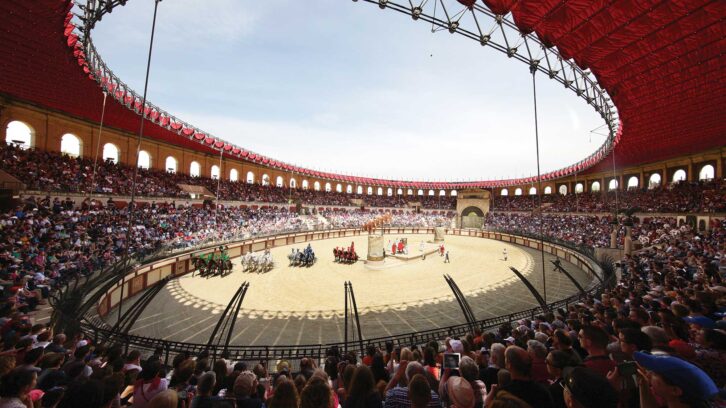
This fascinating place is not one of those rollercoaster affairs, but a collection of incredible shows and adventures that will keep the family engrossed for a couple of days. Search online for nearby campsites.
While you’re there, don’t miss seeing the spectacular mechanical elephant at Les Machines de L’île in Nantes.
Join a club
42. Both of the major leisure vehicle touring clubs offer access to excellent European campsites.
The Camping & Caravanning Club collaborates with Allcamps, which represents 1800 sites in 18 countries. This trusted partner guarantees a high level of cleanliness, service and quality.
The Caravan & Motorhome Club works with more than 350 campsites across Europe. You can book with confidence and the backing of the country’s biggest touring organisation.
campingandcaravanningclub.co.uk
European breakdown and recovery cover from the clubs is a sensible buy. As a member, not just a customer, you will receive enhanced advice and support should you encounter any problems in Europe, and that includes recovery of your vehicle to the UK and repatriation of the occupants. Compare prices and service levels with the likes of the AA and RAC.
43. You’ll find the best prices for Channel crossings, campsites and attractions by booking your tickets in advance. Great offers are often found at the NEC shows and similar events around the country.
If you’re planning to head to the upcoming October Show, don’t miss our Motorhome and Caravan Show discount code.
Staying safe while touring Europe in a campervan
44. Photograph all important travel documents and store them on your phones as back-up. Keep breakdown documentation in the vehicle. If you take your V5 registration documents, store them securely.
45. Don’t be tempted to speed if you find yourself rushing back to catch a ferry. The Gendarmerie (rightly) sets up speed traps in the last 50km before Calais and other north-coast ports. Been there, done that. We were ‘escorted’ to a cash point to extract the necessary fine funds, then to a police station to get a receipt! Luckily, P&O didn’t charge us for the missed ferry crossing.
46. Make a clear note of the dimensions (especially the height) of your ’van and stick it on the dashboard. It’s reassuring to have these measurements to hand.
47. Be sensible about how far you drive each day, especially when you’ve had an early start. Plan regular stops, and pause for a nap if you are feeling drowsy.
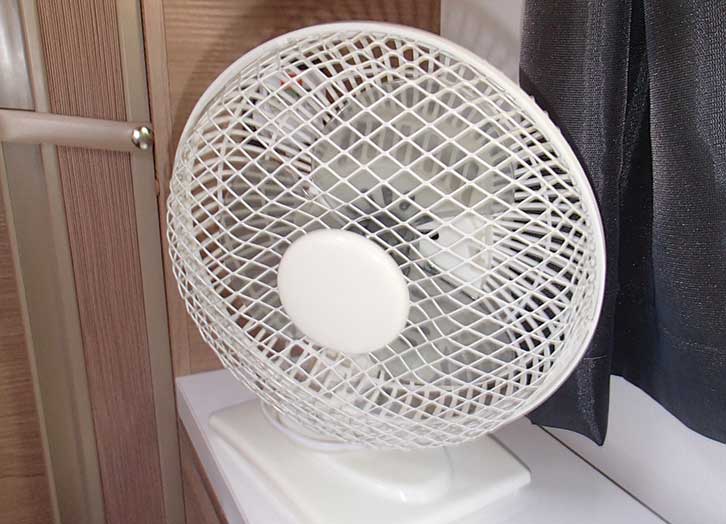
48. If you’re heading to southern Europe, where temperatures are in the 30s or 40s, you’re going to be looking for ways to keep cool on tour. I’d advise buying some cheap electric fans. Holidays are more relaxing when you sleep well.
LEZ Euro Cities
As a final point, when you’re travelling around Europe in a campervan, you’re going to come across Low-Emission Zones (LEZ). They are now popping up all over Europe, and they apply to visitors, too. Drive through one without the correct sticker or paperwork, and you’ll get a fine in the post faster than you can say: “I didn’t see the sign!”
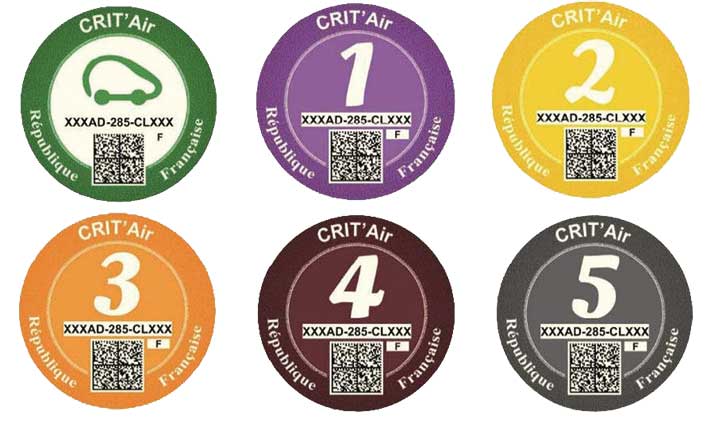
- France: Paris, Lyon, Grenoble, Strasbourg: Crit’Air sticker required
- Germany: Berlin, Cologne, Stuttgart: Umweltzone badge needed
- Italy: Milan, Rome, Florence: Zona a Traffico Limitato restrictions
- Belgium: Antwerp, Brussels, Ghent: Older vehicles restricted
- Netherlands: Amsterdam, Rotterdam, Utrecht: LEZ in place
- Denmark: Copenhagen, Aarhus, Odense: Strict diesel rules
- Spain: Madrid, Barcelona: Emissions-based access
- Sweden: Stockholm, Gothenburg: LEZ enforced
For further information, see urbanaccessregulations.eu
After some more advice for getting the most from campervanning? Then head to our Go Campervanning: General Advice section for more great ideas!
Lead image: Getty Images
If you’ve enjoyed reading this article, why not get the latest news, reviews and features delivered direct to your door or inbox every month. Take advantage of our brilliant Practical Motorhome magazine SUBSCRIBERS’ OFFER and SIGN UP TO OUR NEWSLETTER for regular weekly updates on all things motorhome related.