
To be honest, there’s such a huge choice of touring products out there, we could easily have detailed the top 100 gadgets to carry in your campervan! But packing everything including the kitchen sink isn’t the point of a touring holiday. It’s all about distilling your equipment down to the pure essentials.
Items that are either so practical, you can’t live without them, or so good that they really enhance your holiday. While online influencers might claim that waffle-makers and multisensory light shows are essential, we’re a bit more realistic. We provide less waffle and more tangible touring goodness!
So now it’s time to settle in and get comfortable with a brew, as we run through our top 20 of the very best campervan gadgets.
Practical Motorhome is supported by its audience. When you purchase through links on our site, we may earn an affiliate commission. Learn more
1 Powerbanks
Whether you’re a tech geek and have a motorhome packed with devices, or a luddite who can barely tolerate a mobile phone, you’re going to need to charge a gadget at some point.
Keeping your phone powered up will not only give you peace of mind in the event of an incident, but can also allow you to take as many photos and videos of your adventures as possible without the worry of draining the battery.
Powerbanks require no technical know-how and simply plug into the device you want to power, using the appropriate cable.

The bigger the capacity of the powerbank in amp hours (Ah), the longer it will power your devices.
We’d look for models that include USB-C outputs as well as the much more common USB-A ports, because they’re more efficient at transferring power.
We’d recommend picking one with the largest capacity for its size and weight to suit your usage. We also prefer ones that display the remaining charge as a percentage.
They’re an essential to stash in your backpack when you’re out for a walk. We pack several – smaller models for use on the go, and larger units for devices that are used close to the campervan.
2 Battery-to-battery charger
Did you know your leisure vehicle is awash with excess power when you’re on the road, but most people let it go to waste by simply using it to charge the vehicle battery?
However, with the simple addition of a battery-to-battery (B2B) charger, you can harness all this free energy to recharge your leisure battery bank.
For touring use and wild camping, this can make you far less reliant on electrical hook-ups.
A powerful B2B system can often fully recharge your batteries while you’re on the road between campsites, and they’re a fully automatic system.
If you’re a fan of staying at CLs and CSs or smaller campsites that don’t always offer hook-ups, a B2B system should be one of your first choices of gadget. They’re a gamechanger.
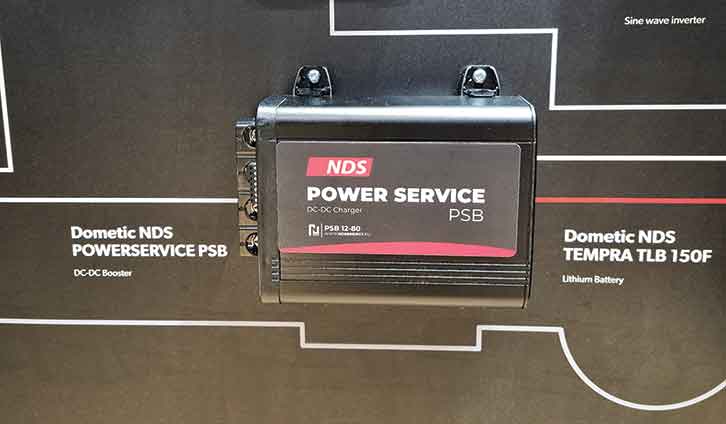
B2Bs use the high-powered output from your campervan’s alternator – often 150-240A on modern stop-start equipped base vehicles – to rapidly recharge your leisure batteries. They’re a bit like a Tesla supercharger for the best leisure battery for a campervan.
Typically, they recharge your leisure battery at 40-80A, so they are much quicker than a traditional split-charge relay system, which often struggles to offer 10A of power.
This can cut the recharge time of a big battery bank by several hours and to put 80A into context, that would be an equivalent charge rate to having 10 100W solar panels in the peak of summer. Serious power!
So why don’t all motorhomes come with them fitted? Well, the answer is cost and marketing appeal. A black box hidden from view isn’t as appealing to buyers as something obvious, such as the best campervan projector or a sat nav. But this is the most useful product you’ll ever fit to a ’van that isn’t tethered to a hook-up, and as you most likely know, campervans do not necessarily need electric hook-up when you’re touring.
Price From £500 plus fitting
Stockists Vehicle electrical specialists, such as RoadPro
3 Solar panels
We’d always advise anybody who owns a campervan to fit a large solar panel on the roof. They’re lightweight, easy to install and work well during the day in summer.
Having a campervan solar panel almost feels like free power when you’re camping in summer, and they can certainly help to extend your off-grid capability in brighter months.
They’re also pretty inexpensive these days, with prices starting from around £200 for a 100W model. We wouldn’t go any smaller than that.
However, you do need to understand their limitations to get the most out of them. The main issue in the UK is that in winter, the combination of the angle of the sun, reduced daylight hours and the general lack of brightness makes their performance fall off a cliff.

A solar panel that will produce 7A in summer might only be able to average 0.5A in the winter. That’s rather like trying to refill a bathtub with a thimble! It will barely tickle your leisure battery, let alone recharge it. To compensate for this reduced winter output, always fit the maximum power solar panel possible, and make sure you have a back-up power source for winter use, such as an extra leisure battery or an electrical hook-up.
Clouds and daylight conditions mean solar output varies wildly and is not suitable as a main power source.
All solar panels must be used with a regulator, with the MPPT models being the most efficient.
4 Mobile air conditioning
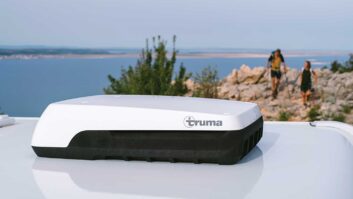
It’s the compact size and low price that makes this universal air-con unit so appealing, and as it doesn’t need to be permanently fixed to your ’van, there’s no need for expensive fitting bills or cutting holes in the roof.
The portable Mestic SPA-3000 unit, weighing in at 22.5kg (so you’ll need to watch your payload), is split into two sections and designed to hang out of a leisure vehicle window (so don’t put it on the sliding door of a campervan!).

It’s really compact and hangs off the window frame on a steel bracket with layflat tubing – simply hang it outside, plug it in and shut the window as much as possible (it’s best to use it only when you’re inside, for security). It plugs into the mains and offers up to 3050 BTU of cooling. It draws 795W, so it’s best to use it on the mains, but it could be run by an inverter and a powerful lithium battery bank at a pinch.
This is a proper air-conditioning unit, too, rather than a basic evaporator-cooler. This is the real deal.
In addition, it being portable means that you won’t lose your investment when you trade in your vehicle – just transfer the air-conditioning unit to your new motorhome and you’ll be able to keep your cool!
5 Mini toolset
It might not be the sexiest thing in the world, but this neat Bahco S330 toolset certainly makes brilliant use of space.
It’s about the size of a paperback book, yet is crammed with everything you need to fix habitation items and some base vehicle parts.
It carries the minimum tools and, while it probably won’t enable you to do an engine swap, it will solve most of the problems you’ll encounter. Put it this way, if this toolset can’t fix the issue, you’ll need to ring a breakdown firm!

Bahco’s S330 could almost have been designed specifically for leisure vehicle use, and it’s also supplied in a sturdy moulded case with strong latches.
Inside, you’ll find a good selection of flat-head, Phillips and hex bits (from 3mm to 8mm), sockets from 10mm to 22mm (with 21mm omitted), various extension bars, a universal joint, a 3/8 socket driver and a screwdriver with a ¼-inch adaptor end.
All of the sockets are surface-drive style, so they can also be used on close imperial sizes (that is, 1/2in is roughly 13mm), suiting older campervans, too.
6 Multimeter
Electrical issues are probably the second most common problem in leisure vehicles after tyre failures, and being able to rapidly diagnose such issues can save you a world of pain.
It’s not going to win awards for cool good looks, but when it comes to tracking down problems with the electrics in your ’van, a multimeter has to be one of the most useful tools that you can keep to hand on tour.
It not only allows you to check fuses and measure the voltage of vehicle and leisure batteries, and alternator health, it can also help you to find bad earth points (a possible problem with all vehicles) and check wire continuity.
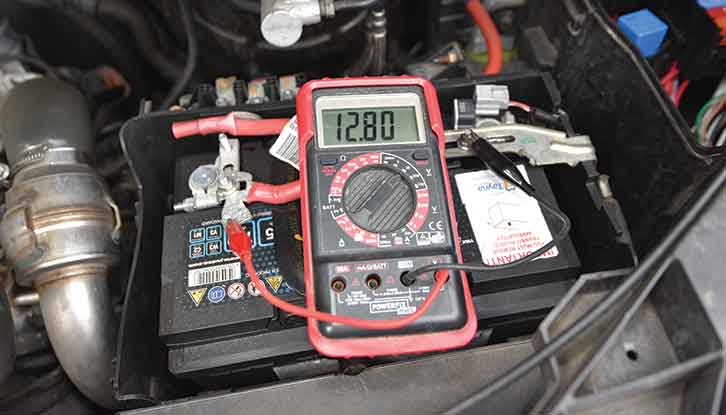
You don’t need to be an electrician to use one, and they can be bought from as little as £10 in stores such as Aldi and Lidl, so there’s simply no excuse not to pack one.
We’d recommend a basic digital model – you don’t need all the bells and whistles for basic checks – and they’re very intuitive to use.
There are lots of YouTube videos on how to use a multimeter and they are well worth viewing, to familiarise yourself with its operation. Trust us, you’ll be thankful you did if you are ever in rural France on a Sunday night and your electrics start playing up!
7 Fire Safety Stick
Fire is a terrifying prospect in a leisure vehicle and the materials they’re made from – aluminium, laminate boards and various foams and fabrics – burn with enthusiasm if subjected to a source of ignition. Even fire-retardant materials only resist for a limited duration.
Cooking and electrical fires are the most common sources of ignition, together with outdoor barbecues, so it’s wise to have the best fire extinguisher for a camper van and a fire blanket close to hand.
Your motorhome probably already has some form of fire extinguisher, but if it is an aerosol-sized, old, dry powder unit, it will make a mess when discharged and might only provide a few seconds of squirt. Don’t get the idea you’ll necessarily be squirting away for minutes – some only last six seconds or so, giving very little time to tackle a fire.

Fire Safety Sticks work differently and use a chemical gas mix to put out fires. Despite their compact size, they can work for 50-100 seconds, to offer much more punch than traditional extinguishers.
They’re suitable for all leisure vehicle fire types – including cooking oil and electrical fires – and are rated for Class A, B, C and F uses. In fact, we think it’s such a useful gadget for a campervan that we picked it as the best motorhome accessory at the Practical Motorhome Awards 2025.
With all fire extinguisher systems, the key thing to understand is that they are designed to save lives and allow you to escape the vehicle.
The first thing to do in a fire is to get everyone out of the ’van as a priority. Only then tackle the fire if it’s small and you can do so without endangering yourself. This is why extinguishers should always be located near a doorway. Call the fire brigade for anything other than a small fire.
8 Towbar for toys
If you’re thinking of skipping over this section because you’re never going to tow anything, just hold on a second.
Many people never use towbars to haul trailers around. A towbar is best thought of as a universal attachment point for all manner of fun toys and hobbies. You could find yourself towing a car with a campervan, for instance, Like the Swiss Army knife, it’s so versatile and useful.
Although the vast majority of panel van conversions can have a towbar fitted, not all motorhomes can have one, so you need to check this first before you spend any money.
While a local towbar fitter is fine for a panel van conversion, for coachbuilt motorhomes, we’d always recommend tracking down and travelling to see a motorhome towbar specialist.
Vehicles manufactured after 1 April 2012 will need to have a Type Approved towbar fitted and we would also always recommend using a dedicated wiring loom if one is available.

So what can you use the towbar for? Well, almost anything you can think of, is the short answer.
From additional storage boxes for outdoor furniture to carrying mountain bikes or ebikes, a towbar is endlessly useful for transporting essential gear for the pursuit of outdoor hobbies.
The only thing you need to be mindful of is the maximum towball weight for your vehicle – for motorhomes, this is usually between 100kg and 150kg, and it is the total figure for everything that is hanging off the towball.
As a possibly unexpected bonus, towbars also help to beef up the rear structure of your vehicle and can protect the rear bumper and back panel from parking knocks.
Some people have even been known to use them for pulling a trailer!
9 Self-amalgamating silicone tape
This tape is one of those things that you don’t know you need, until you actually need it – and then you’ll wonder how on earth you ever managed without it! We’d better explain how this is a motorhome tool kit essential…
Unlike adhesive tape that requires a glue-laden backing material to stick to surfaces, this tape sticks to itself when it is unwrapped, to form a waterproof seal. It is silicone based, so it can also withstand heat. They’re usually good for temperatures of up to 260C.
The question is, what can you use it for? Well, any hose or pipe on the ’van that has sprung a leak is the answer.

From repairing habitation plumbing on either cold or hot systems, to fixing a leaking coolant hose in the engine bay, this amazing tape can fix the issue until a permanent repair can be done.
It can be used on any material and will even work underwater, making it a highly versatile product.
We’ve used it to repair split coolant pipes and patch leaky plumbing pipes. It is endlessly useful and well worth packing in every vehicle, in addition to the more common leisure vehicle staples of cable ties and duct tape.
10 Tracker
Many insurance providers now insist on leisure vehicles above a certain value being fitted with a tracking device, and these are without doubt one of the best security devices that you can ever fit to a campervan or motorhome.
Not only do they rapidly alert you of an issue and greatly increase the chances of recovering your vehicle if it has been stolen, but they also have several secondary benefits, which we will come to shortly.
The key point here is to differentiate between an insurance-approved tracking system and one that carries no approvals. Both tend to use radio waves and cellular masts to plot the route of a vehicle, but the police will only take action in the case of an insurance-approved tracking system.
Recovering the vehicle yourself is also possible, but can put you at risk.
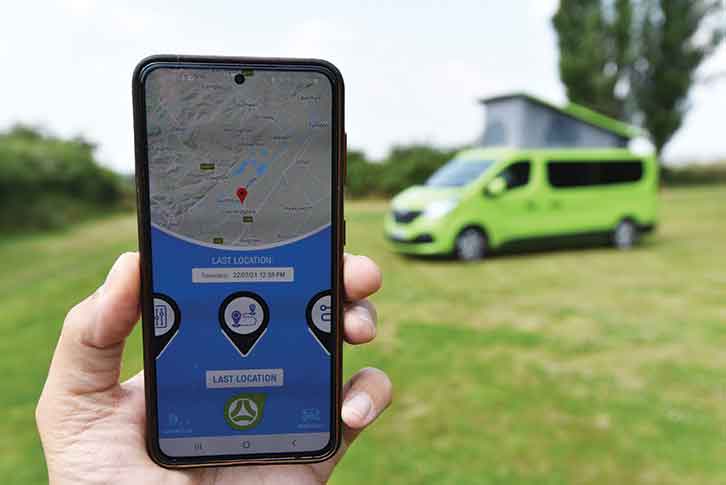
Unlike an alarm system – which will invariably scare the living daylights out of you at 5am when you’ve pressed the wrong button on the keyfob – a tracker is a far less invasive device that simply guards your vehicle in the background.
They’re brilliant for monitoring your ’van when it is remote from you (for example, you’re away on a trip, or it’s not stored at your house) and will alert you if the vehicle is started or knocked, or if anyone attempts to tow it away.
Most systems enable you to set up a geo-fence, which allows you to define a set radius for it to operate in. This can be as small as a few metres around the vehicle, to several miles, so can be very useful if you’ve lent the vehicle out and want to check its movements.
You can also remotely monitor the battery voltage of your vehicle with a tracker, and this is invaluable if it’s being housed in a storage facility.
Trackers can be useful to help you find your ’van if you have forgotten where you parked it, and can even help you to plot the route you’ve travelled on holiday if you want to note down any significant routes, attractions or campsites. So as well as providing some welcome peace of mind, they can be used for fun things, too.
Prices From £60 for a non-approved unit to £400+ for insurance-approved systems
Stockists Widely available online, for example from trackershop-uk.com
11 Collapsible kitchenware
Collapsible kettles, washing-up bowls and pans probably sound like a crazy idea – until you actually use them and realise how immensely practical they are. As well as being easy to wash up, they’re great to use, as the silicone sides are cool to the touch and reduce the risk of burning yourself on hot items from the hob.
They’re also ideal for making the most use of your precious cupboard capacity and take up roughly half the space of conventional kitchenware – very handy when you’re kitting out your campervan.
So you can either pack more pans, or have more room for other kitchen items when you’re loading a campervan. Those silicone sides have a secondary benefit in reducing rattles on the road, too, which is a bonus.
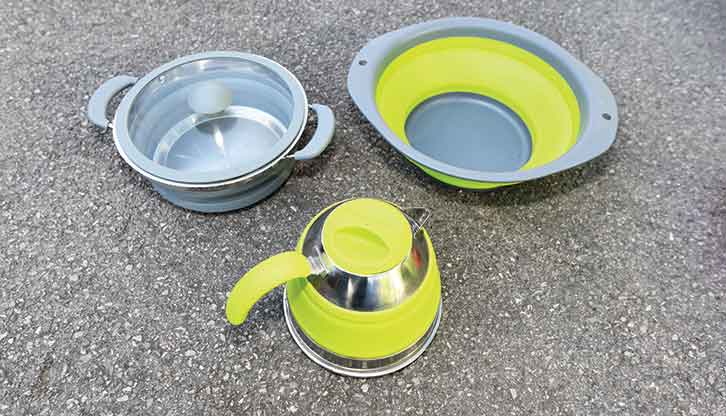
These days, you’ll find that everything from draining boards to bowls, and colanders to water-carriers are available in collapsible form – but they do cost a little bit more than regular items.
However, it’s worth it in the long run because they do seem to last well – the ones in our campervan are over seven years old and still going strong.
Another plus point for fashionistas is that they are available in loads of funky colours, so you’re sure to find something to match the Italian leather in your custom VW ID. Buzz conversion…
12 Magic of microfibre
Space is always at a premium in any leisure vehicle, and one of the bulkiest things to store in overhead lockers has to be fluffy cotton towels. Especially if the whole family is on board.
They are not particularly light items, either, and can take an age to dry out.
Happily, new materials mean there’s a much better option these days, in the form of microfibre towels.
These are typically about a fifth of the size of a conventional towel, making them a doddle to stow in the smallest washroom lockers or cupboards.

They dry much faster than cotton towels, too, so they’re ideal for use with watersports, where you’ll want the towel to dry overnight, ready for the next day’s adventures. Microfibre towels often come supplied in a convenient storage bag and typically cost around £10 online for an unbranded product. Check the size before ordering – some are comically small to keep the price down.
They’re excellent at drying off water, although you do need to adopt a slightly different technique, compared to that used with a conventional cotton towel. Think of it as more like leathering down a car than drying with a normal towel. But once you get used to this, they’re a real gamechanger.
Once you experience their compact efficiency, you’ll never want to go back to a conventional towel!
13 Rinse-off shower
If you’ve ever wondered “do campervans have showers?”, you will be aware that various models will provide different setups.
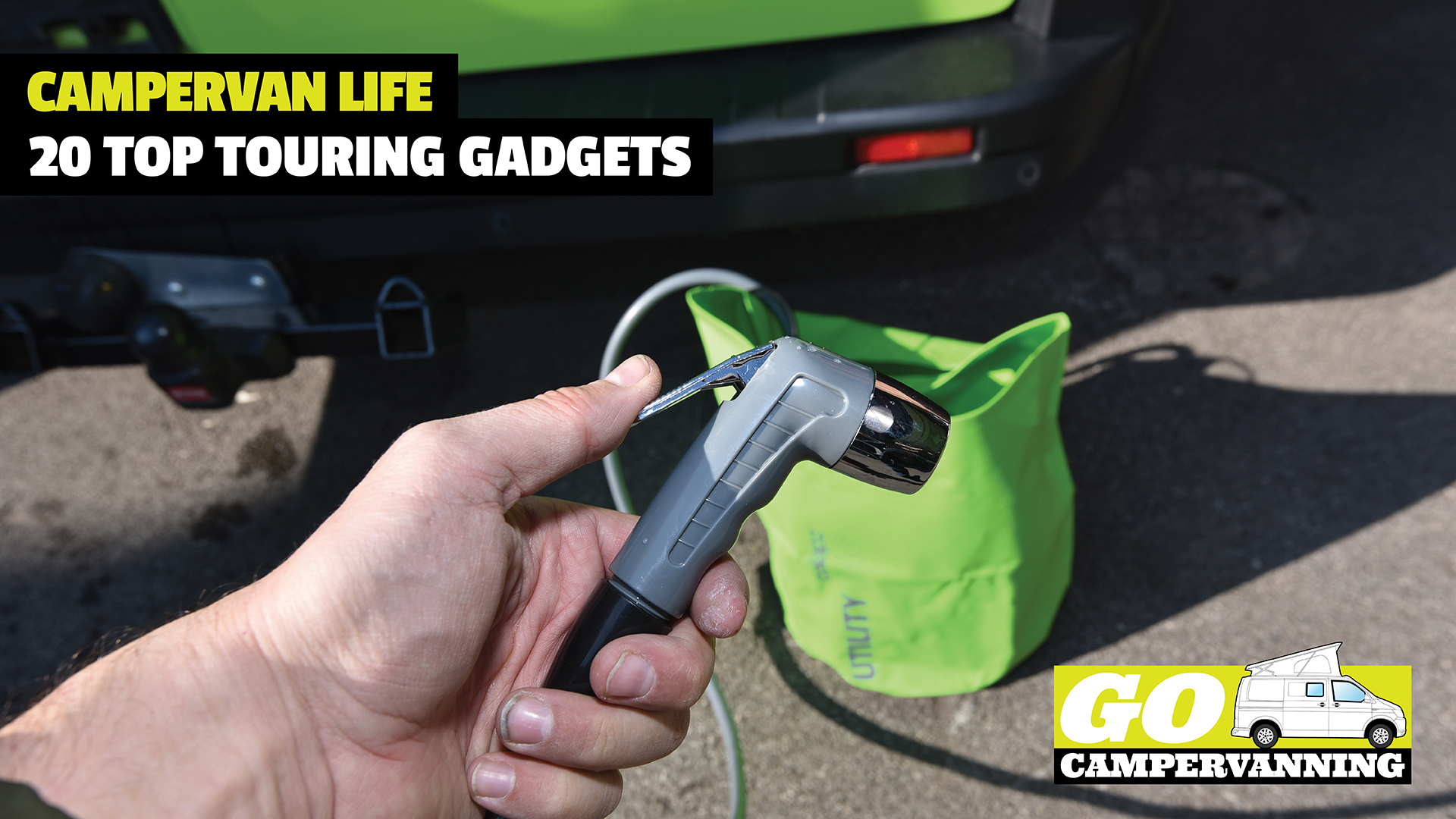
While some campervans have an external shower system built in, it’s not particularly easy or cheap to retrofit, so it’s best to look out for a vehicle that already has this when you buy it. However, if yours doesn’t and you don’t want the expense of retrofitting one, adding one of these compact folding bucket and shower systems from Colapz could be the solution.
The shower head is powered by a battery system that plugs into a USB point to recharge. It comes with a rinse-off nozzle and a shower head with a sucker clamp.
The whole thing packs down into a compact circular case that’s smaller than a tin of biscuits, and can easily be stashed on board any leisure vehicle.
When paired with a Colapz bucket, you’ve got yourself a very convenient shower system that can be deployed at a moment’s notice.

It’s perfect for rinsing salt water off wetsuits, cleaning down muddy dogs or just getting the worst of the British countryside off your walking boots.
In addition, it’s so easy to pack away, you could keep it in the glovebox.
The one shown here is the Colapz 3in1 USB rechargeable travel model. They also now do a premium model for an extra tenner, which features a torch built into the battery pack.
The Colapz Utility water-carrier, which holds 8 litres, is a well-made and useful item that is worth getting hold of. It also packs down to a very convenient compact size and can be slotted into the smallest of cupboards.
14 Carabiners
Essential for keeping bunches of keys safely attached to a belt loop or your rucksack, the humble carabiner also has endless other uses in and around your leisure vehicle.
It’s another of those multiple-role items that is a lot more durable and easier to use than a permanent fixing method, such as a cable tie.
Over many years of touring, we’ve used them to secure washing lines to trees, fix broken breakaway cables on trailers and attach kayaks and watercraft securely to mooring points.
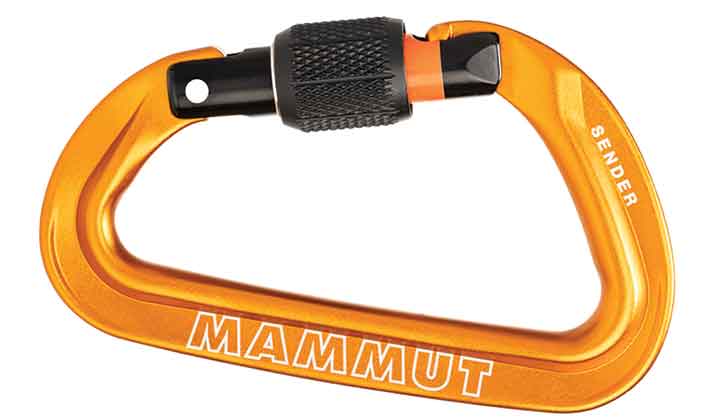
Heavier-duty carabiners are ideal for attaching awning storm straps to ground pegs. For light use, you don’t need costly climbing-grade carabiners (although they are obviously stronger as they’re safety tested and load rated), but the ones with screw-on clamps are the best to go for, because they’re far less likely to spring open.
Prices range from a couple of quid for a multipack of small ones, to £20 for a heavy-duty model. Keeping a selection close to hand won’t break the bank.
15 Tabletop barbecue
The internet is awash with all manner of barbecue systems, but we reckon that you simply can’t beat the taste of a charcoal motorhome BBQ, and the various tabletop models on the market offer a sociable cooking experience.
Tabletop models are probably best for smaller families or couples – larger families or groups might be better off using a bigger, freestanding unit – but they have the benefit of taking up very little room when packed in your ’van.

This Berndes model only cost around £35 and is ideal for up to three people, with an easy-to-clean stainless-steel bowl set around a charcoal burner.
AA batteries power a fan system to speed up the cooking, and it has cool wall sides, so guests can’t accidentally burn themselves.
It would be better with a lid – other models offer this – but it works well, is compact and, very importantly, is easy to clean. This makes it particularly handy after you’ve finished cooking and don’t want to spend time washing various parts that might be covered in baked-on food!
16 Coffee machine
For many of us, even the most leisurely tour requires access to a decent cup of coffee in the ’van. It is, quite simply, an essential component of any trip.
The key problem with using a kettle and instant coffee is that the resulting brew rarely tastes much good. Kettle plus teabags is fine for tea, but for great coffee, you need something more.
To get the maximum flavour out of roasted coffee beans, a coffee-shop will freshly grind the beans, then run hot water through the grounds at a set pressure. This combination of pressure and temperature allows the beans to release their oils, producing a pleasing crema layer of foam at the top – always the sign of a good cup of coffee.
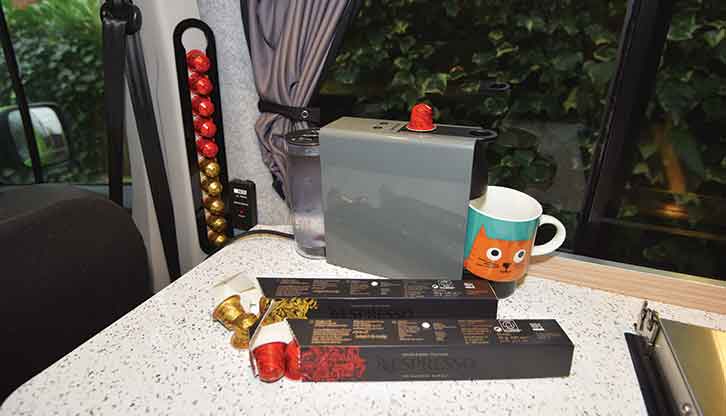
While some of the more upmarket RVs have the room and the power to operate a full-size, coffee-shop-style bean-to-cup machine, campervans and motorhomes are generally far
more limited on space.
So a good alternative is a pod machine. Having tested various models, we reckon the Nespresso machine, paired with genuine Nespresso pods, takes some beating for flavour. The pods are aluminium and can be recycled by Freepost, it’s also worth noting.
Nespresso machines are quite compact, but as they need around 1500W of power to run, they’re best used on a hook-up. To operate one free from a hook-up would involve an expensive pure sine wave inverter of at least 2000W and a large battery bank – rather expensive!
17 Bluetooth speaker
From creating background ambience for your barbecue, to boosting the sound of a film watched on your tablet, Bluetooth speakers are a very versatile way to enhance your touring.
It’s best to use a separate Bluetooth speaker, so you can avoid flattening the vehicle battery if you’re using the cab audio system.
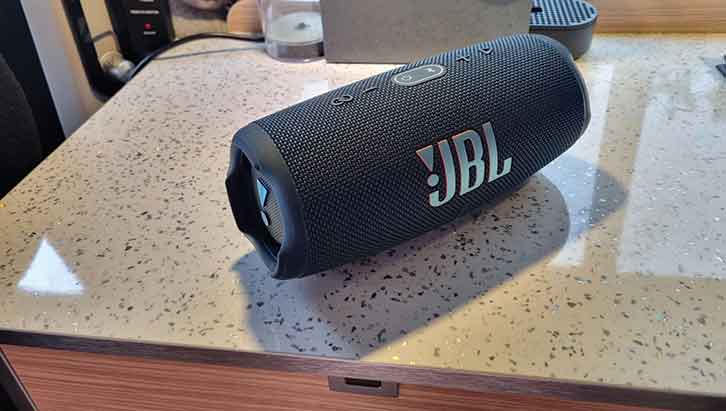
Although you can buy all manner of portable unbranded ones with prices starting from as little as a tenner, it’s well worth spending a little extra to get the far superior sound of a branded model. We’ve tested various speakers over the years, from expensive but superb Bose models to some excellent units from Sony and LG.
It has a pleasingly rich sound for such a compact unit – it’s about the size of two coffee mugs. As a bonus, it can also be used as a portable battery bank, because it has a USB-A outlet point. In addition, it syncs easily with Android and iPhones and has plenty of power for its size.
18 Fairy lights
Although we’d generally avoid items branded with vehicle logos, we have to say that these VW roundel fairy lights are pretty irresistible for any fans of Transporter and Crafter conversions. They’d look great in a VW camper van, too!

The genuine VW lights shown here are made by Brisa, so they’re not some cheap knock-off. They are powered by three AA batteries.
There are lots of different brands of fairy lights on the market, but for safety, we’d always suggest opting for ones powered by a standalone battery.
It allows them to be more portable, and they aren’t going to be blindingly bright – they’ll just add a pleasant glow of mood lighting.
19 Storage box
If you have a campervan for everyday use, perhaps for commuting during the week and then being packed full of gear for away days at the weekend, you’re going to love this folding storage box that we found on Amazon.
Branded Oasser, it provides up to 65 litres of space and has lots of useful storage compartments, but folds down to just 9cm thick when not in use.
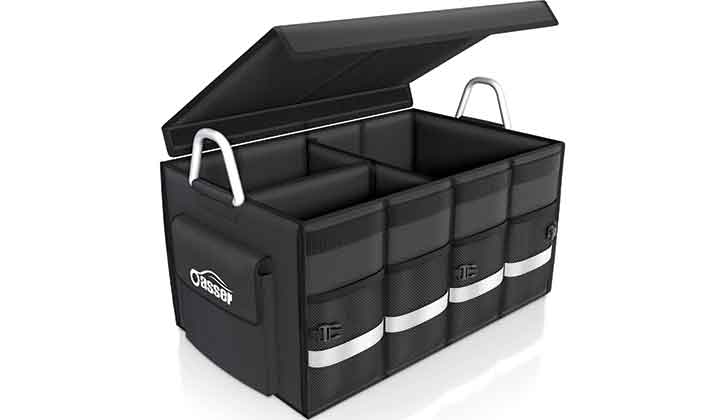
That makes it absolutely ideal for loading your hobby kit into the ’van for fast weekend getaways.
You can find various sizes and shapes of these folding storage boxes online (for example, Oasser also has a larger 95-litre model for £42), so we’d pick a few to precisely fit your luggage area.
Containerising items is the key to rapid loading at the weekend and avoids you leaving anything essential behind when you’re packing for a trip.
20 Wastebin
Although many of us simply hang a plastic bag from one of the cupboard door knobs, it’s not the ideal way to handle rubbish, and it invariably falls off or gets knocked into, risking waste dropping onto the floor.
This smart bin is a much neater way of holding your rubbish and it has the added convenience of being able to hang from one of the cab seat headrests.

It’s very compact, too, being similar in size to a couple of boxes of tissues, and when it’s not in use, it can simply be folded up out of the way.
In addition, it’s waterproof, so it could also be used outside the vehicle in an awning, making it a very versatile item – always a plus in touring gear.
We see it being used as a recycling container, or as general storage for anything from toys to pet accessories.
After some more inspiration about the campervan lifestyle? Then head to our Go Campervanning: Campervan Life section for more great ideas!
If you’ve enjoyed reading this article, why not get the latest news, reviews and features delivered direct to your door or inbox every month. Take advantage of our brilliant Practical Motorhome magazine SUBSCRIBERS’ OFFER and SIGN UP TO OUR NEWSLETTER for regular weekly updates on all things motorhome related.