Having a campervan solar panel can make a real difference to a touring experience. After the initial financial outlay to purchase one, you will find that adding one to the best camper van provides free power, operating silently as it runs year after year, and also offers a valuable method to tour in a greener and cleaner way.
Ideal for off-grid campervanning and eco-friendly touring, there is the further benefit that this motorhome upgrade requires barely any maintenance, either, apart from a regular clean to ensure they operate at peak performance.
Here, I”m going to be taking a look at solar panels, outlining how they work, what to consider when choosing the right panels for your ‘van, and the benefits they provide.
How do campervan solar panels work?
A modern photovoltaic (PV) solar panel works by converting sunlight into usable electrical energy, keeping the best campervan leisure battery charged up, which, subsequently, powers your 12V touring appliances.
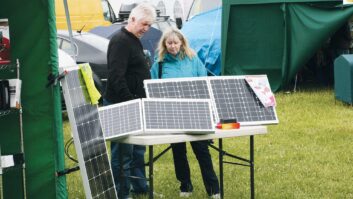
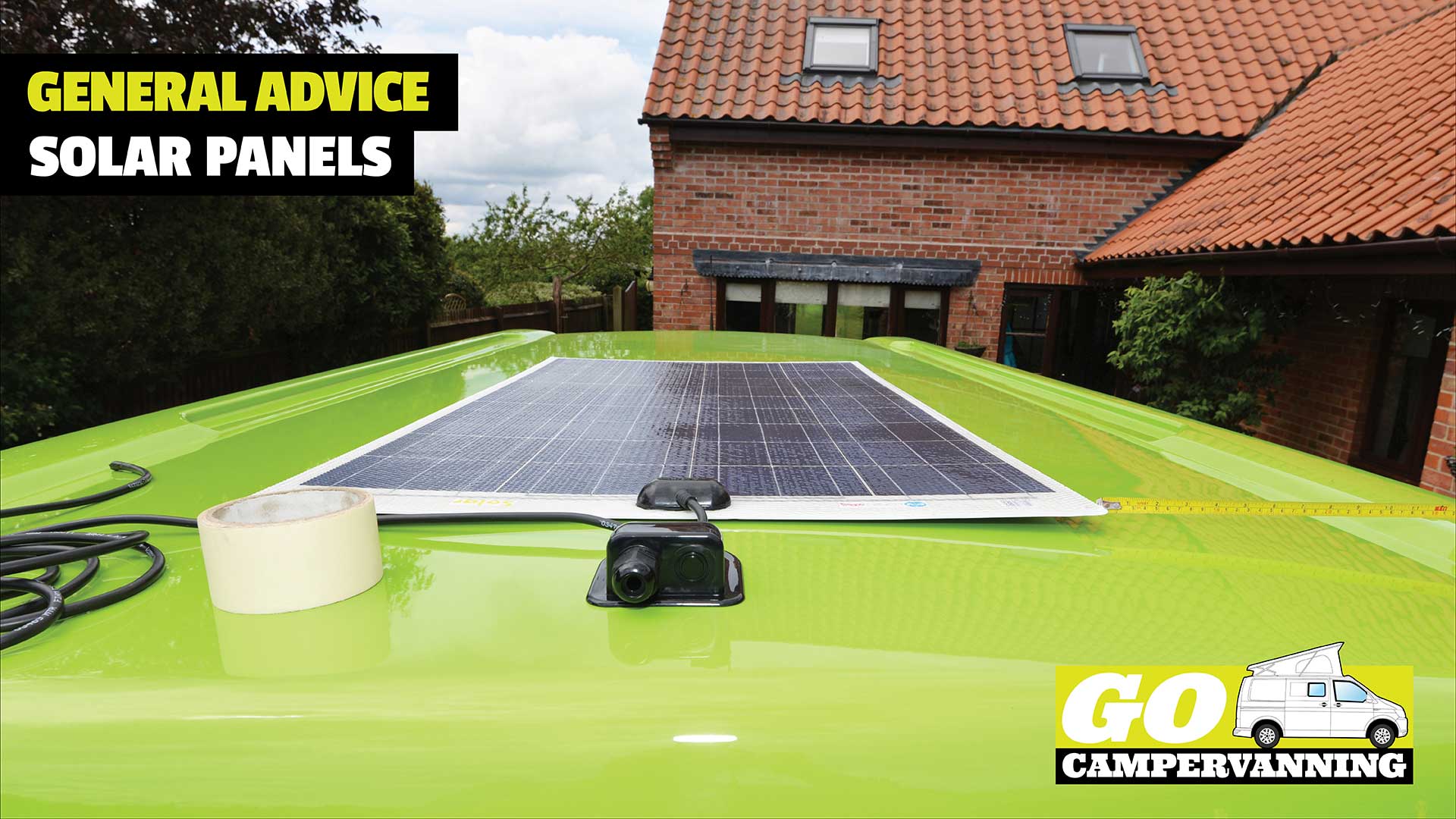
You will find the system will generally involve either having one or more solar panels mounted permanently onto the roof of a campervan, or having portable units which you would then set up next to your ‘van.
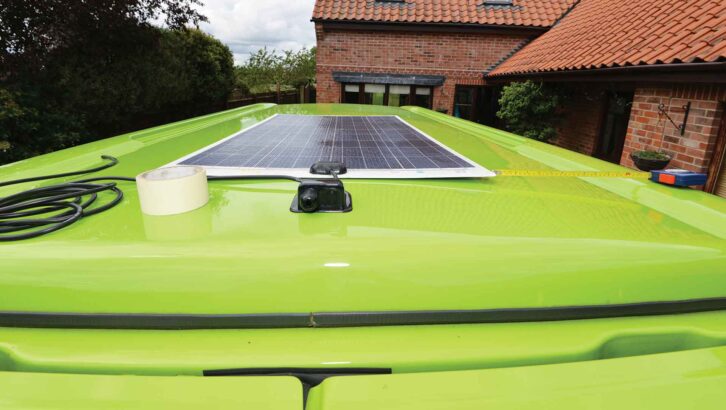
Sunlight gets absorbed by the silicon cells, which make up a PV solar panel, which excites the material’s electrons. The movement from these electrons will then generate the electrical (DC) direct current, which will subsequently charge your battery.
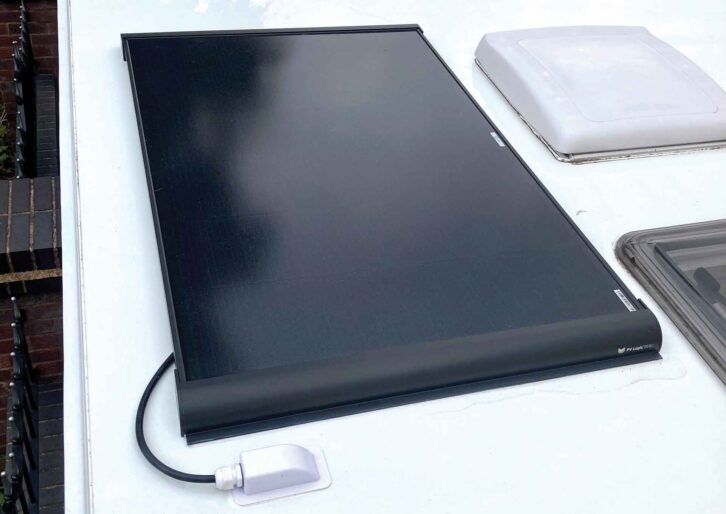
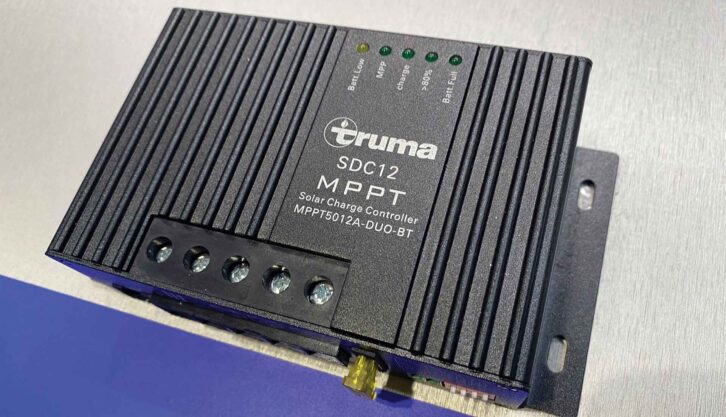
This electricity does not go straight to the battery, however. Instead, it passes through a charge controller, which is also called a regulator.
The charge controller plays an important role in the process, managing the electricity’s flow which ensures the battery does not get damaged or overcharged.
Maximum Power Point Tracking (MPPT) controllers will optimise the charging in varying light conditions. The regulated DC power will then flow from the charge controller to the leisure battery in your campervan, ensuring it stays charged even when you’re not using the vehicle.
This energy gets stored within the battery, where it can be accessed at any time of the day to power a wide variety of low-voltage gadgets, including one of the best motorhome TVs, lights and phone chargers.
When you know what solar panels can do, it’s easy to see why Peter Rosenthal considers them one of his 20 top touring gadgets to enhance any campervan tour.
How to choose the solar panels for your campervan
However, getting the right campervan solar panels will be an important step – you need to find one that works for your budget and the space you have in your ‘van, as well as matching your energy requirements. These are the most crucial factors to consider:
Power output
As a stating point, you need to know what size solar panel you need for a campervan.
The output of a solar panel is measured in watts (W). This will tell you the amount of electricity that can be produced by the panel in the right conditions. For ‘van owners, you will find panel sizes will generally range from 50W to 200W.
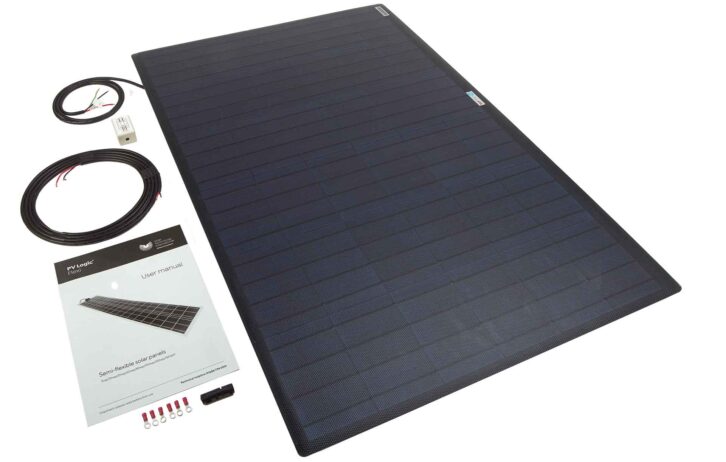
When you’re working out the size you need, we’d advise thinking about how much power you will realistically require. For instance, a higher output panel will be a better choice if you’re looking to power a motorhome off-grid or like to run various devices.
- 50W to 80W: this wattage will be a good choice for the likes of LED lighting and charging phones.
- 100W to 150W: this wattage can operate small appliances and will also keep a leisure battery topped up during shorter tours.
- 150W to 200W+: for frequent off-gridders, this size will be a good choice, allowing you to operate gadgets such as laptops, water pumps and TVs.
The types of panels
When you’re looking at panels, you will find there are two main types to choose from, both of which are made with different forms of silicon: monocrystalline and polycrystalline.
Monocrystalline panels
This type of panel uses high-purity silicon, which should operate more effectively in lower light conditions. Thanks to a more compact size despite having the same power rating, they can be a good choice for owners of small campervans, where space could be harder to come by.
Polycrystalline panels
Then there are polycrystalline panels – these are larger yet provide the same output, but are a little less efficient. Despite this, they can be a more budget-friendly option thanks to having a cheaper price tag – just make sure you have the necessary roof space!
Rigid vs flexible panels
There are again two types of design to choose from – rigid or flexible panels, and both have their own pros and cons.
Rigid panels
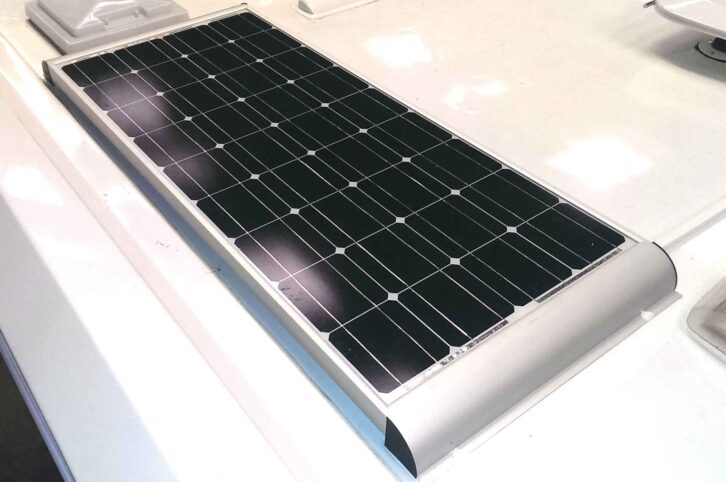
Coming with a protective glass top and an aluminium frame, rigid solar panels provide long-lasting efficiency and durability. They can be mounted to the roof of a ‘van permanently, but two things I will highlight – firstly, they can be heavy and secondly, they will be more visible.
Flexible panels
The second type of panel is more lightweight and a narrower option, so will not only be easier to fit but also more discreet. Able to contour to the shape of your ‘van’s roof, the best options can even be walked on.
Size and available space
Work out how much space there is on your campervan’s roof, factoring in any aerials and similar, before you purchase a panel.
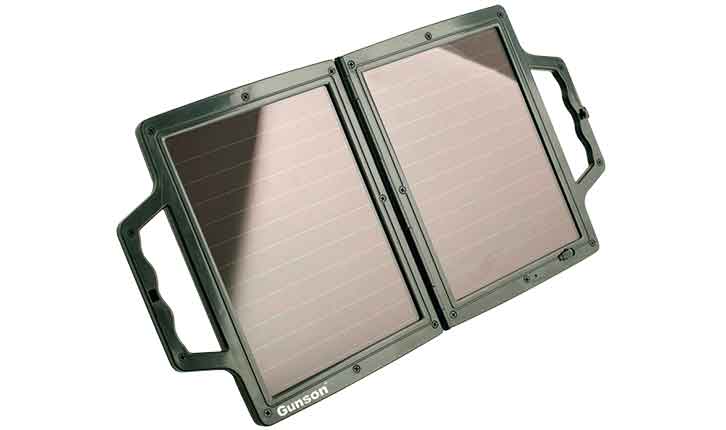
You could find your roof space is tight, in which case a higher-efficiency panel could be necessary to give you better power from a smaller size. As another choice, you could look at a portable or suitcase-style panel – these can be set up when required and then stored when you no longer need to use them.
Where to place your solar panels
Unsurprisingly, where panels are placed will affect how well they work. You should aim to have them mounted in such a way that will maximise their exposure to the sun, generally facing upwards without being shaded by the roof. Keep your camper van away from trees and buildings too.
A convenient choice is a permanent roof-mounted panel, but the downside of this is that it doesn’t let you unleash their potential by being able to position the panels to directly face the sun.
In contrast, a portable panel will offer more flexibility, as they can be moved around during the day. If you leave them facing east before going to bed, you will have your leisure battery charging from first light too, and during the summer months, this can give you three or four hours of charge time.
Regulator (charge controller) compatibility
Something you will not want to forget about is getting a good quality charge controller. This will manage the flow of power from the solar panel to your leisure battery.
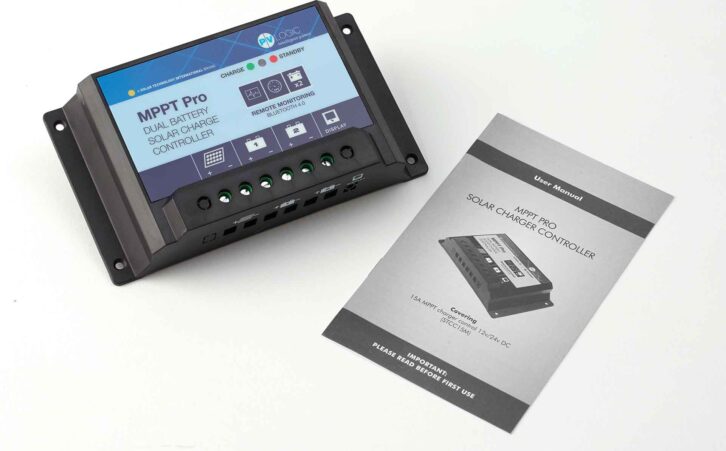
For those with the budget for it, I’d advise looking for MPPT controllers, which will provide more efficiency than their Pulse Width Modulation (PWM) counterparts, taking care to find one that is rated for the output of the solar panel and the type of battery you have (for instance, lead-acid or lithium).
The build quality of the panel
Take care to choose one with a good build quality, looking out for the waterproof rating and warranty. An outdoor panel should have an IP65 rating, be UV-resistant and also provide a solid construction.
Reputable manufacturers will offer a 10-year warranty (or more), and we’d always recommend buying from a reputable dealer – buying a cheap online one could very much turn out to be a case of false economy.
Why consider PV solar panels
1 They’re ideal for off-gridding
Campervanners who love to tour off-grid will find solar panels a very useful touring gadget. They allow you to pitch up at your chosen destination without worrying about not having access to electric hook-up.
If you’re wild camping or are touring at a basic CL or aire, your solar panels will ensure you can still use the lighting, charging points, water pumps and low-power appliances, giving you the option of touring away from full-facility campsites.
2 Topping up the leisure battery
A solar panel provides an effective way of ensuring your leisure battery stays charged, especially during spring and summer months when there is more daylight.
Having a decent-sized panel and a charge controller also helps you maintain the health of your battery, as it lowers the chances of a deep discharge, instead helping to prolong its lifespan.
If you don’t have a campervan for everyday use but instead put it into storage during the winter months, a solar panel can then trickle-charge the leisure battery too, which helps it stay in good condition between tours.
3. Security
A good solar panel can also help to keep your campervan safe, as it allows the alarm, tracker system and vehicle battery to operate. This will be particularly valuable if your ‘van is left unattended for periods of time.

If the ‘van went into storage, a flat motorhome battery could disable your security gadgets, subsequently leaving it more vulnerable – and potentially invalidating your insurance too.
Solar panels ensure you have a low-maintenance, automated method of keeping your battery topped up, and even during winter, they should be able to provide enough charge to keep the security system functioning properly.
4. Helping the environment
Solar panels also play a part in helping the environment, reducing your fossil fuel and mains hook-up usage.
Ok, there will be an environmental footprint from when they’re manufactured, but after installing them, you will find you are using clean energy, which is produced silently and without any emissions.
5. Financial savings
A solar panel is one of those gadgets which not only pays for itself over time but can actually save you money.
This is because you will no longer have to rely on paid hook-up, while you could also find your leisure battery lasts longer, so long as you maintain it. If you intend to use your solar panel regularly, the amount you save can quickly add up.
The downsides of PV solar panels
1. The cost
I’ve already highlighted the financial savings that can be made in the long term – but in the short term, you will find there’s a significant outlay, as you have to cover the costs of a good panel, a controller, the cables, and installing it, which can come to several hundred pounds.
2. The weather
The weather is going to play a big part in the effectiveness of the panels. During the winter or prolonged cloudy spells, the energy produced will drop.
Solar panels are still able to work when the weather is overcast, but they have less of an output, so you could end up with an undercharged, if not flat, battery if you rely on panels too much.
3. They require maintenance
While they are largely low-maintenance, solar panels are not completely maintenance-free. Panels get dirty, in particular if they’re parked under trees, so you will find you need to clean them on occasion to keep them working effectively, for instance, when you’re carrying out the campervan roof cleaning task.
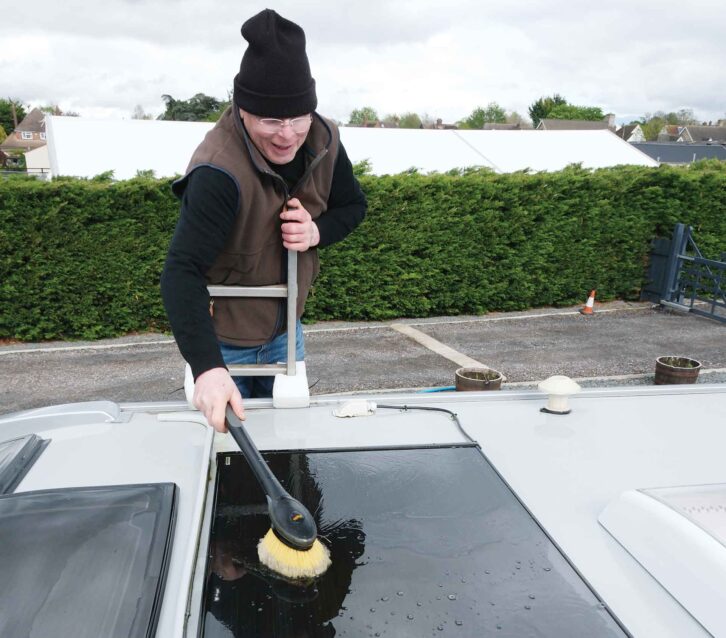
4. Watch out for theft or vandalism
Solar panels could lead to unwanted attention, with portable and semi-portable panels particularly at risk if they are eft unattended.
5. Space in a campervan
Campervans are not blessed with huge roofs, so it could be tricky fitting a big enough panel, after taking the vents and roof lights into account.
Another source of power you could consider for when you’re touring is one of the best portable power stations for a campervan – they act as a standalone power source, allowing you to use your favourite gadgets.
After some more advice for getting the most from campervanning? Then head to our Go Campervanning: General Advice section for more great ideas!
Future Publishing Limited, the publisher of Practical Motorhome, provides the information in this article in good faith and makes no representation as to its completeness or accuracy. Individuals carrying out the instructions do so at their own risk and must exercise their independent judgement in determining the appropriateness of the advice to their circumstances. Individuals should take appropriate safety precautions and be aware of the risk of electrocution when dealing with electrical products. To the fullest extent permitted by law, neither Future nor its employees or agents shall have any liability in connection with the use of this information. Double check any warranty is not affected before proceeding.
If you’ve enjoyed reading this article, why not get the latest news, reviews and features delivered direct to your door or inbox every month. Take advantage of our brilliant Practical Motorhome magazine SUBSCRIBERS’ OFFER and SIGN UP TO OUR NEWSLETTER for regular weekly updates on all things motorhome related.