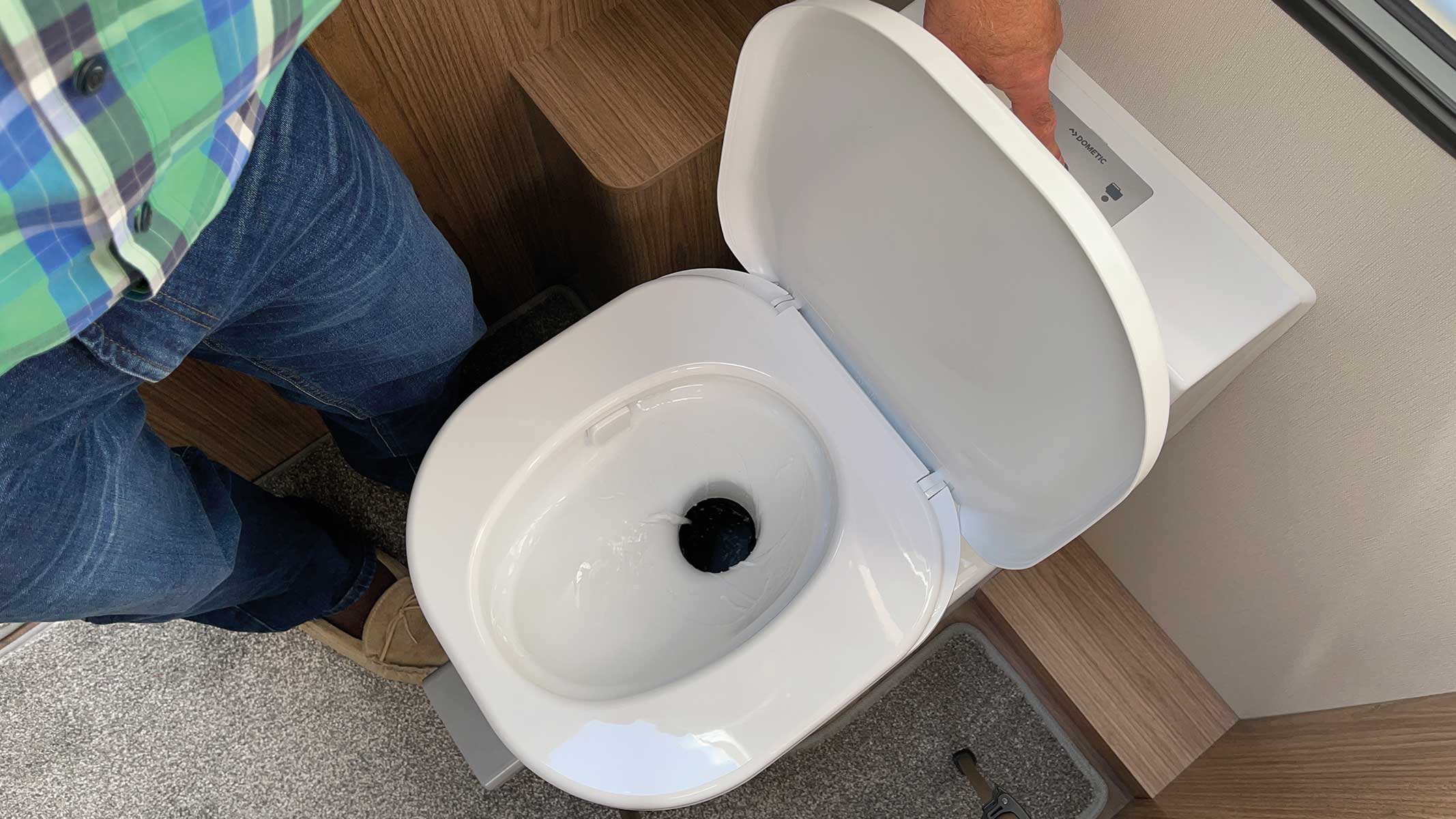
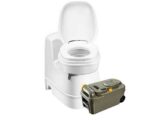


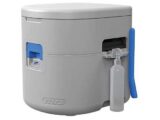
This may sound odd, but I have to confess to being a fan of motorhome toilets. The cassette toilet is one of those items in your ’van that is very much taken for granted as it humbly sits in the background quietly getting on with its job.
It’s actually a fantastic bit of engineering. It’s compact, clean and does a great job of masking odours. It slides neatly out of the side of your vehicle in a convenient cassette and can then be easily wheeled to your nearest campsite emptying point when it’s time to empty the motorhome cassette toilet. They really are a clever bit of kit that few people appreciate.
While most of the best motorhomes nowadays come equipped with a cassette loo of some description – usually in Thetford or Dometic flavours – it’s worth noting that they’re no longer the only game in town. When it comes to loos the market is shifting direction and there are now lots of new ways to deal with waste.
Much of this is driven by environmental concerns and the need to reduce the use of water and chemicals in loos. Many of these newer units are designed to work with your existing motorhome cassette-loo washrooms and simply replace the existing toilet bowl and cassette mechanisms with new units.
This new shift in direction appears to be driven by German manufacturers who seem to be fascinated with this topic! It’s probably also driven by the high levels of support for green politics in Germany. Most people now accept that the environment is changing and if we can all do a little bit to help, that’s certainly no bad thing (and don’t miss our tips on greener driving in your motorhome either).
Don’t miss what I had to say about motorhome fuel consumption, either, and what you can do to improve your efficiency.
Practical Motorhome is supported by its audience. When you purchase through links on our site, we may earn an affiliate commission. Learn more
Traditional motorhome chemical and cassette toilets
Before digging into the new kids on the (toilet) block, it’s worth understanding how the motorhome cassette toilet works. A typical washroom will have a fixed toilet bowl that contains a flush control (manual or electric) that activates the rinse water after the loo has been used.
All waste then flows into a removable holding tank – the cassette – which stores the liquid and solid waste, together with the dissolvable toilet paper. Chemicals, either organic or inorganic, are used to mask the smells and are designed to break down the solid waste and liquid.
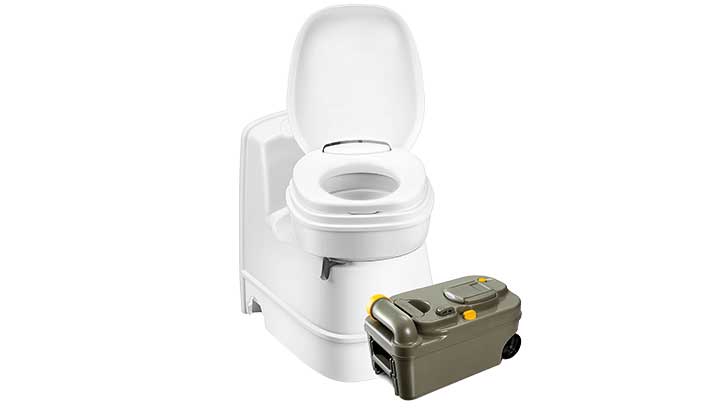
The clever bit about the cassette is the blade that seals off the access hole. This not only seals tightly to the bowl to prevent smell leakage (see: how to fix a leaking toilet cassette), but also acts as an opening and closing access hatch to the tank.
The cassette can then be neatly slid out of the side of the vehicle and then carried – or more commonly wheeled along like a piece of carry-on luggage – to the site’s emptying point (often referred to as the Elsan point on more traditional campsites).
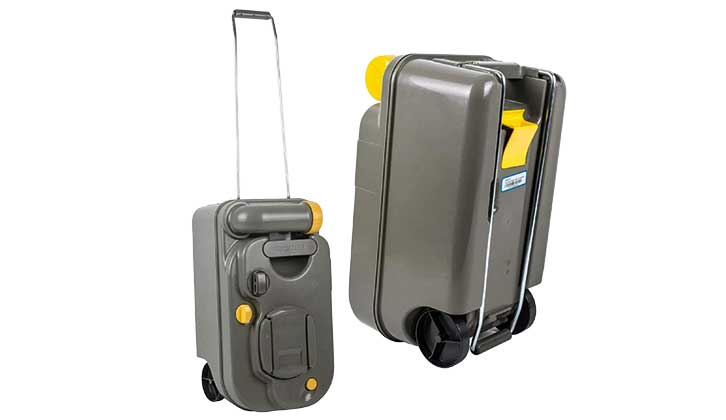
Rotate the emptying spout, unscrew the cap and drain the contents by pressing the built-in pressure relief valve. Like we said, it’s a clever and efficient bit of engineering.
Unsurprisingly, the size of motorhome you have comes in here.
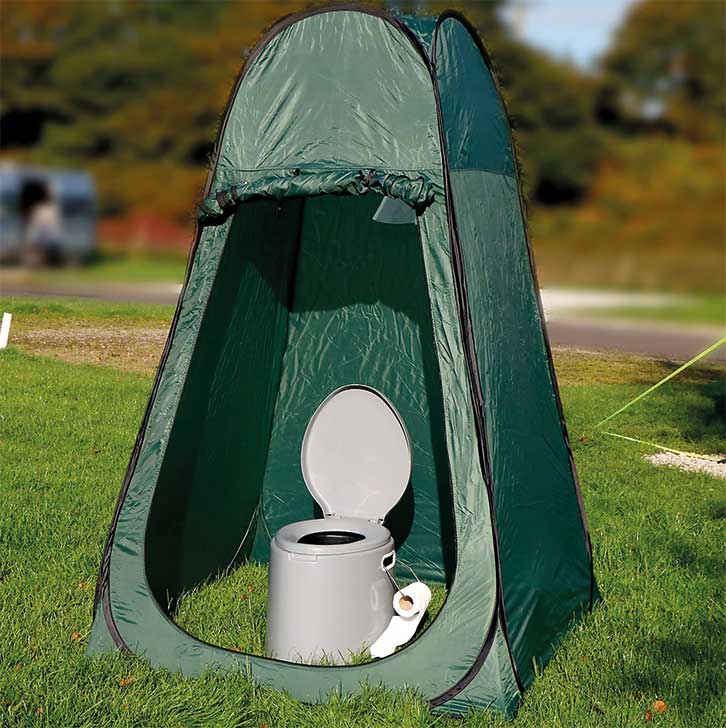
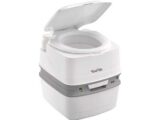
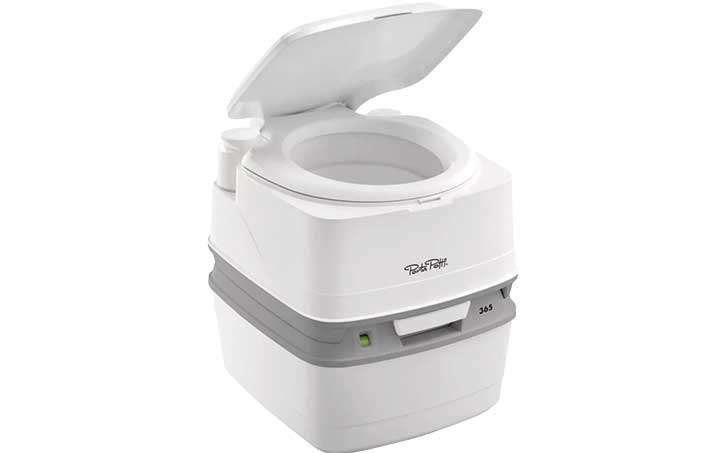
Small campervans tend to use a chemical loo (or Porta Potti – which is a trade name) which is a more basic version of a cassette loo but with a built-in rinse and waste tank.
The best portable toilet for a campervan will usually separate in half for easier emptying and have the advantage of being entirely portable, enabling them to be used in a dedicated toilet tent or awning.
So, on to the best motorhome toilet chemical. It’s worth noting that all cassette or chemical loos require both a flushing liquid to be used to clean the bowl, as well as a holding tank chemical to help the solid waste break down and combat smells.
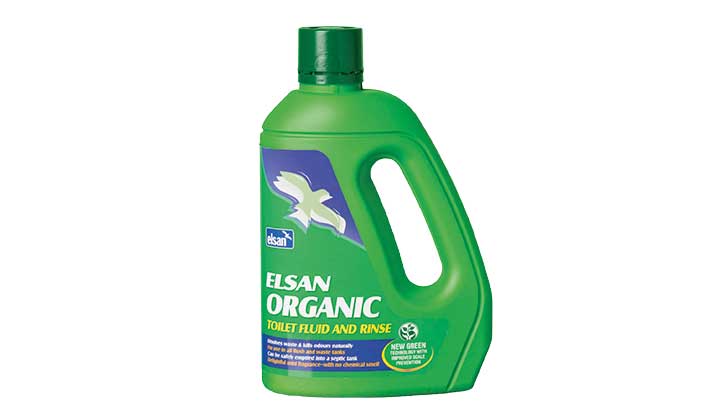
These chemicals are not always the most pleasant and while many of the nastier chemicals (such as formaldehyde, which is known to be carcinogenic and an irritant to the skin and eyes) have been phased out it’s still possible to obtain new-old stock items that contain these ingredients. We would not recommend buying these – they’re banned in Europe and on many campsites, too.
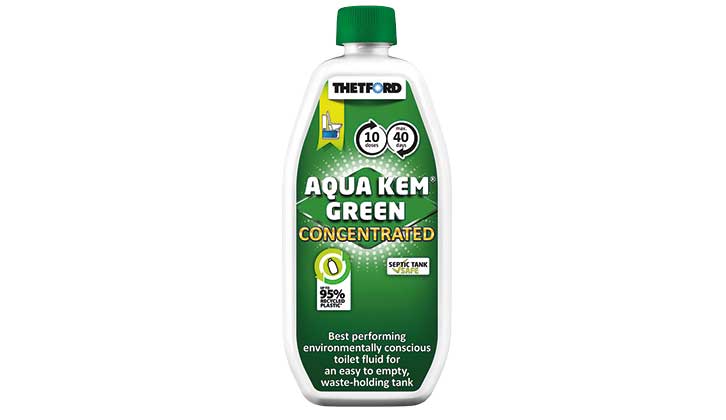
Many people think of holding tank chemicals as being blue (meaning with industrial chemicals) and green (eco or environmentally friendly). Modern toilet chemicals badged as green, organic, eco or bio use either enzyme-based or microbe-based formulas to break down the waste and reduce unpleasant smells.
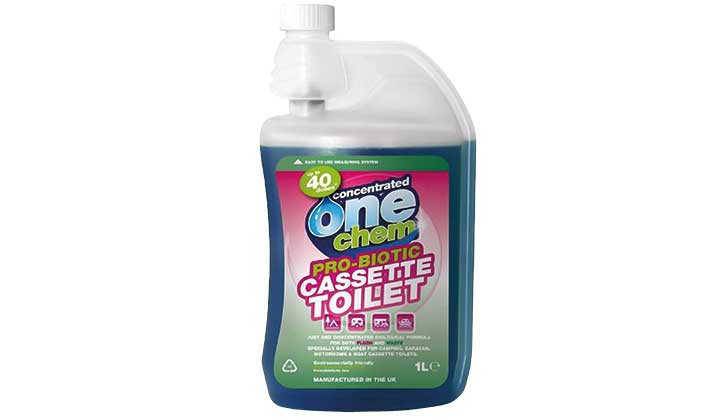
The key thing to note when choosing motorhome toilet chemicals is what the campsite emptying point accepts. You should never dump a blue traditional chemical into an eco-campsite’s septic tank – it can prevent the natural chemicals from working and harm the bacteria in the tank designed to break down waste.
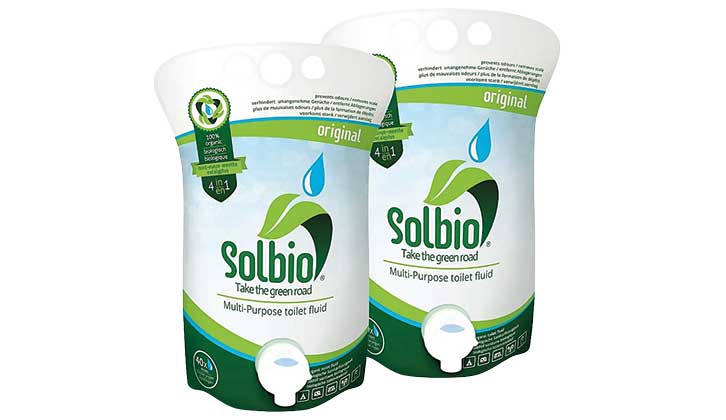
It is probably wise to switch to a more natural eco-type of toilet chemical just to ensure you can always empty your loo at any campsite. If you are thinking of switching to a greener fluid, you’ll need to flush all traces of the ‘blue’ chemicals out of your loo by carefully soaking it and cleaning off any traces of blue streaks in both the toilet bowl and holding tank.
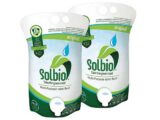
Brands such as Elsan Organic, Solbio organic fluid, Thetford Aqua Ken Green and One Chem Probiotic (which confusingly is actually blue) can all be emptied at most campsites that use a septic tank.
It’s also well worth investing in an eco product that can be used in the flush tank as well as the holding tank – it just saves having to store multiple toilet cleaning products.
Larger A-class motorhomes and RVs take things a step further and use domestic-style loos linked to an additional black waste holding tank (shower water and sink water drains to a traditional waste water tank that empties in the usual way).
While these black waste tanks tend to have much larger capacities than either a chemical or cassette loo, the waste has to be pumped out at a campsite with suitable facilities, which can limit your choice of potential campsites.
Bucket and chuck it!
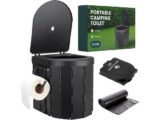
The most basic form of camping loo is quite literally just a bucket with a bag in it, and the idea is that after a few uses (often just one) you simply chuck the bag and contents into a suitable waste bin.
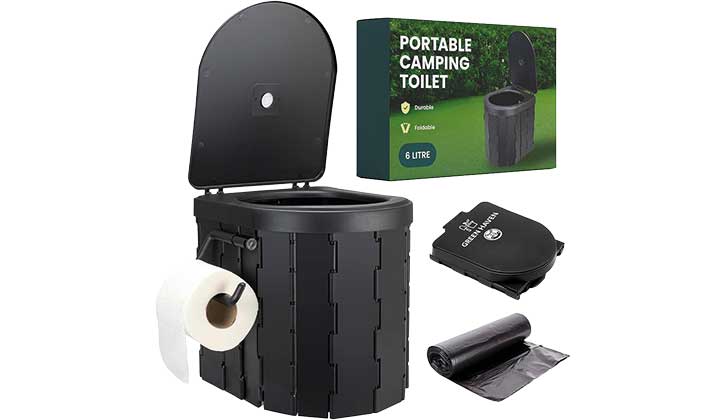
They’re not the most pleasant of loos, but they are basic and one step up from going behind a bush. Just. But for motorhomers used to more sophisticated washrooms, we’ll just leave it at that.
Compost and composting motorhome toilets
A compost loo and a composting loo are different. The former simply acts as a temporary storage point for waste which is then removed and allowed to compost in a separate area. This is more relevant to campsite loos, rather than motorhomes.
A composting loo differs in that it contains the composting process inside it. As such they tend to be much larger than a basic compost loo with more complex mechanisms built into them.
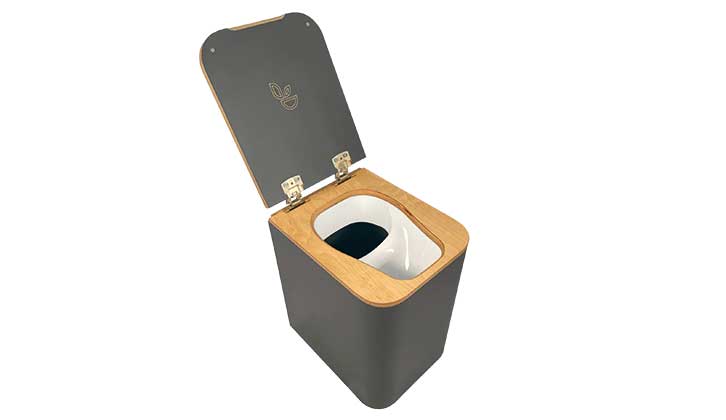
Most composting loos work on a similar principle in that they’re a bucket with a plastic bag in it that use various materials to mask the smells. These can range from scented powders and granules to more organic materials such as sawdust and coffee grounds.

The real benefit to both these types of loo is that they’re waterless and help reduce the use of flushing water, making them ideal for use in areas that lack either mains sewage or fresh water (often remote locations) or vehicles with finite water resources such as motorhomes.
For use in a campervan it would be very easy to replace a conventional loo with a composting version and these could be ideal for green campsites that may not have a conventional waste emptying point.
Separation motorhome toilets
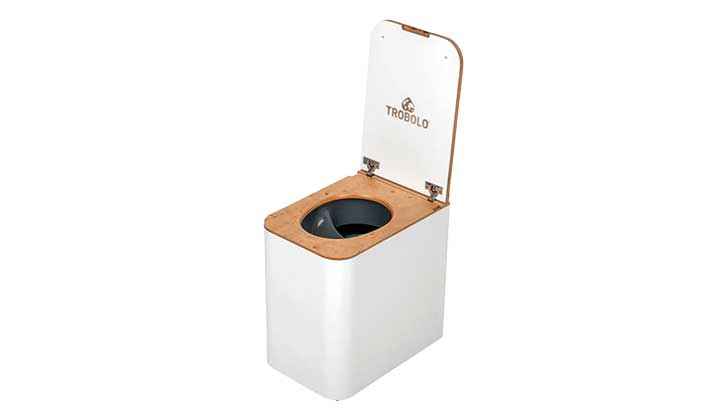
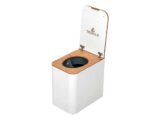
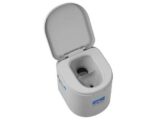
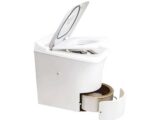
These toilets are designed to separate solids and liquids, thanks to a clever design of bowl that basically has a dividing wall in the middle. This diverts solids and toilet paper to a bag in a bucket and liquids to a holding tank that is similar to a traditional cassette (albeit minus the need for any chemicals or liquid additives). The solids can then be emptied into a suitable waste bin, while the liquids can be emptied at an Elsan point on a campsite.
To avoid smells from the solid part of the loo, various materials are used to try and remove moisture from the solids. These range from peat moss and coconut coir (the rough husk of the nut that is also often used to make doormats), to cat litter and even waste coffee grounds. There are lots of natural products on the market that are designed specifically for this task.
For a campervan it’s easy to convert to a standalone separation toilet and there are lots of models on the market that start from just a few hundred pounds up to flashier models with a bit more ‘eco’ wood and a little less plastic.
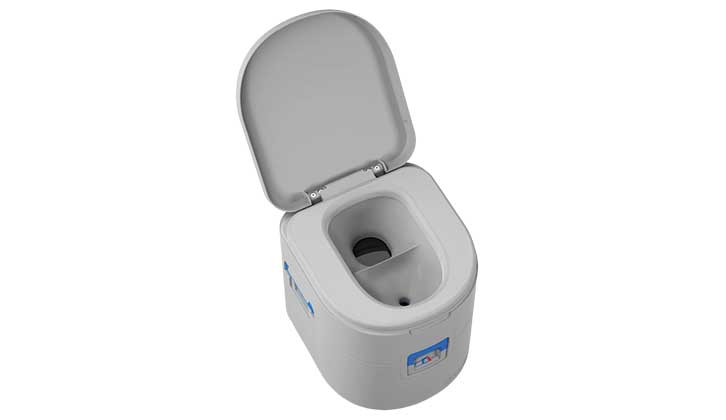
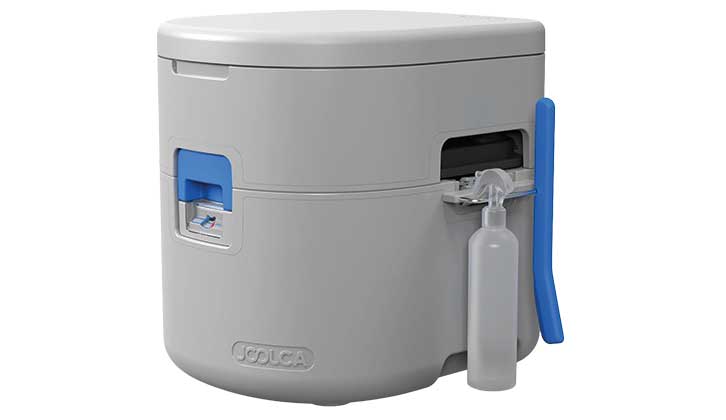
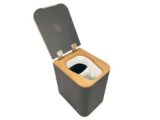
this £259 Joolca GottaGo Eco loo
The wonderfully named GottaGo Eco toilet – from the Joolca website – is a basic stand-alone loo that simply catches the solids in a bagged bucket and has a separate tank in the front for liquids. It costs £259.
What’s more, the Germans have gone one step further with their loos. Not content with those curious ‘waste inspection’ domestic loos, they’ve now created the Arwinger cassette separation toilet.
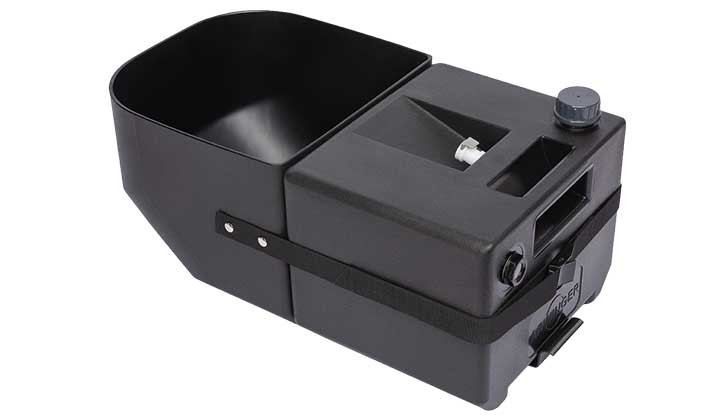
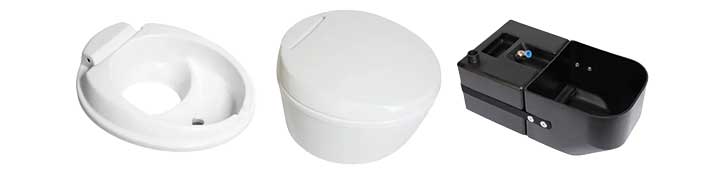
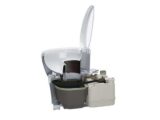
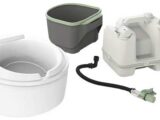
This separation unit can be retrofitted to existing cassette toilets and consists of a replacement separation bowl and a containment unit that replaces the cassette and collects the solids in a bag and the liquids in a tank. This is already available to fit many Thetford loos (such as the C260), with Dometic units set to follow.
The solids section has a volume of 9 litres, while the liquid section has a capacity of 7.7 litres. By comparison, a Thetford C260 cassette unit has a capacity of 17.5 litres, so it’s pretty comparable, though it is worth noting that the scent-masking compounds used will also take up part of the solid sections volume so the total volume will be a little less than with a regular cassette.
As each section is in a separate tank (that weighs a lot less than a full cassette), separation toilets are lighter to carry to the emptying points. Because the separation tanks are not on wheels like a traditional loo cassette, this is something to note.
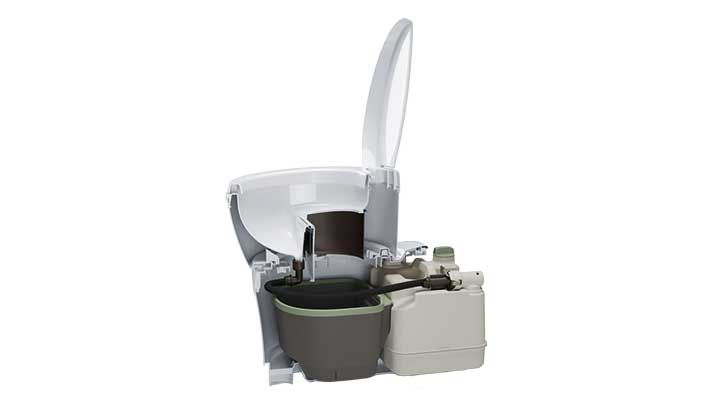
Thetford itself has also recently had a flush of enthusiasm (sorry) for separation toilets and now offers a kit to update many of its existing models; this is available under its Separation Kit (SK) range of models for C220 or C260 models of loo.
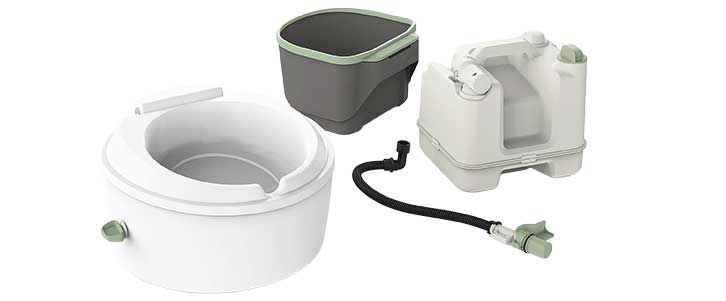
Both the SK220 and SK260 kits can be bought online for between £460 and £550. The liquid section has a capacity of 7.5-litres and a solid section with a similar capacity, making them both easy to carry. The solids section is a simple bucket and you can buy Thetford liner bags and sawdust to mask any smells.
Fitting them is a relatively simple DIY task that only involves basic handtools and is detailed in a pleasingly clear video on the Thetford website. It looked as though
it would take the average DIYer less than an hour to do with no complex set-up.
Interestingly. the fresh water hose is blanked off as part of the conversion, so you will undoubtedly save fresh water – something that is well worth noting for off-grid campers with finite resources.
Thetford also offers its new S-series separation toilet models for new builds. Prices for these start from around £600.
Incineration toilets
Many of the UK’s smaller power stations are incinerators that burn household waste and convert it into electricity. The real benefit is that it reduces the volume of waste going into landfill. As the UK currently sends around 14m tonnes of waste to 500 landfill sites each year, reducing volume has to be a good thing.
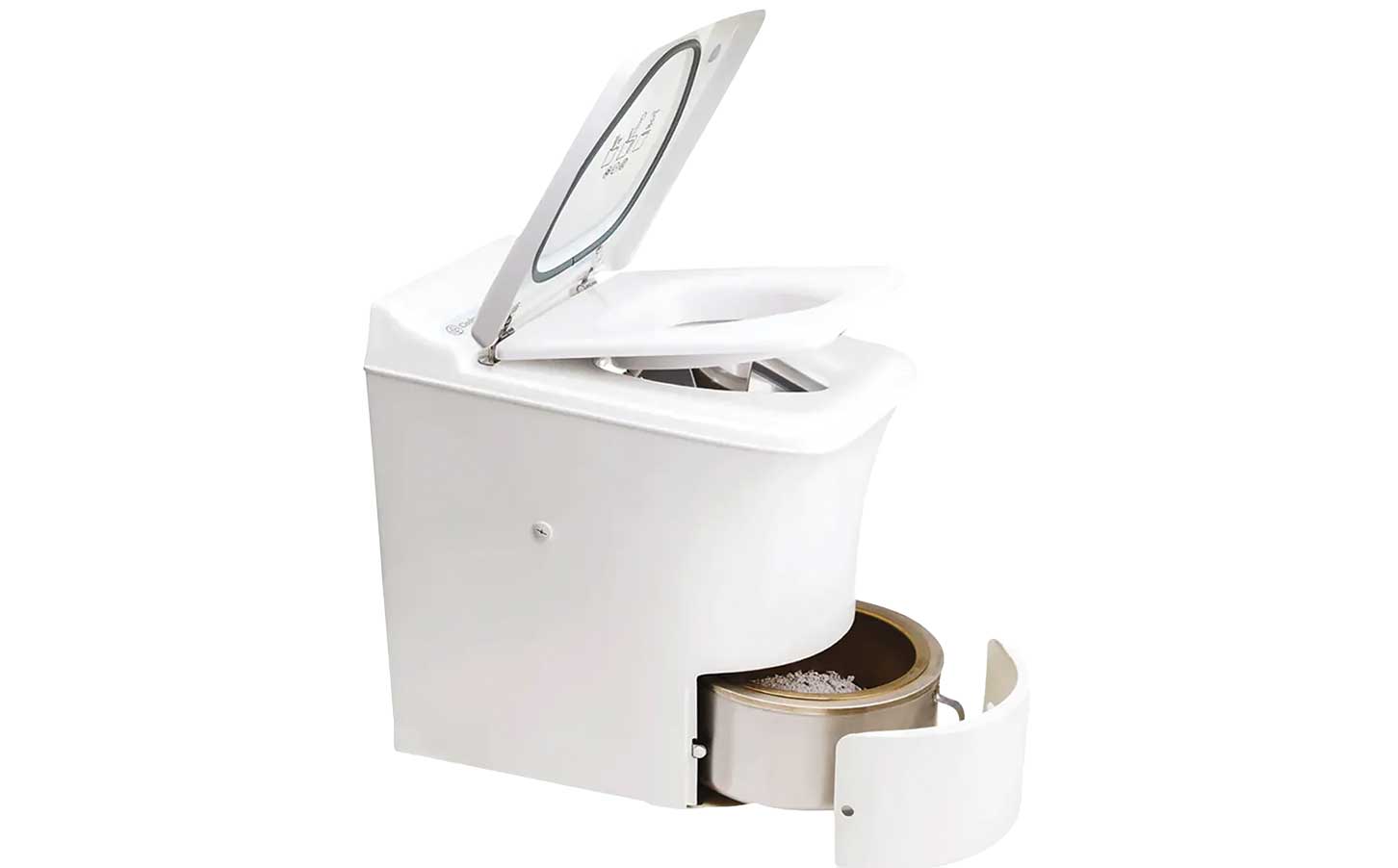
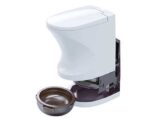
The idea behind the Cinderella motorhome toilet is similar in that it burns waste to reduce volume. These toilet units all replace your existing loo and are either electrically powered or use LPG or diesel to create the heat needed to incinerate the waste. An exit pipe needs to be added to the vehicle for the hot gases to escape, while the cinders are collected in a metal bowl at the base of the unit that looks a little bit like a large dog bowl.
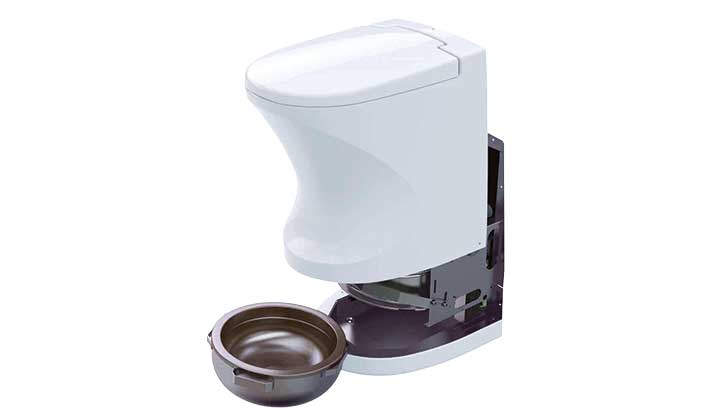
The electric version is 2000W and can be powered by either 12V DC or 240V AC. It uses around one to two kWh per flush. This equates to around 166A, so it’s heavy on electrical power. Each ‘flush’ takes around 50 to 70 minutes to complete.
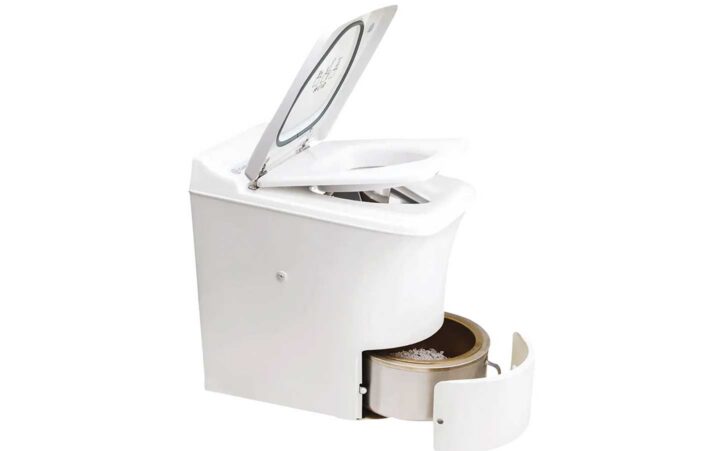
Although they do use electricity (in the electric unit) and fossil fuel in the case of the LPG and diesel models, they don’t use any water and can be used in remote locations because the only thing that you need to empty are the cinders. And these can be quite beneficial to the soil. Due to their heavy power use, you’d want to use the LPG or diesel-powered versions in an overlander as fossil fuels are much more energy dense than batteries, making the vehicle less reliant on the battery bank.
If you’re thinking of adding one retrospectively, in my opinion they’re only really worth considering on specialist builds such as overlanders or self builds – modifying an existing washroom wouldn’t really be cost effective or practical on many models. They start at around £4000.
However, you can buy a UK motorhome that has one fitted – Auto-Sleepers offers the Cinderella toilet as an optional upgrade on its Mercedes-Benz motorhome and campervan ranges, such as the Auto-Sleepers Burford Duo.
The verdict on motorhome toilets
Given how precious water is and how much the climate is changing, it does make sense to consider alternative forms of motorhome toilets and how they might work for you.
Whether it’s worth the expense and, admittedly, extra work involved in using an alternative toilet to the traditional cassette loo is another thing entirely. In the case of campervans that already have a chemical loo, the switch is an easy one, but for the built-in units on motorhomes it’s a harder decision. But it’s great to have the option, and the choices are likely to increase in time, too.
You can also see my tips on how to campervan in a more eco-friendly way too.
Future Publishing Limited, the publisher of Practical Motorhome, provides the information in this article in good faith and makes no representation as to its completeness or accuracy. Individuals carrying out the instructions do so at their own risk and must exercise their independent judgement in determining the appropriateness of the advice to their circumstances. Individuals should take appropriate safety precautions and be aware of the risk of electrocution when dealing with electrical products. To the fullest extent permitted by law, neither Future nor its employees or agents shall have any liability in connection with the use of this information. Double check any warranty is not affected before proceeding.
If you’ve enjoyed reading this article, why not get the latest news, reviews and features delivered direct to your door or inbox every month. Take advantage of our brilliant Practical Motorhome magazine SUBSCRIBERS’ OFFER and SIGN UP TO OUR NEWSLETTER for regular weekly updates on all things motorhome related.