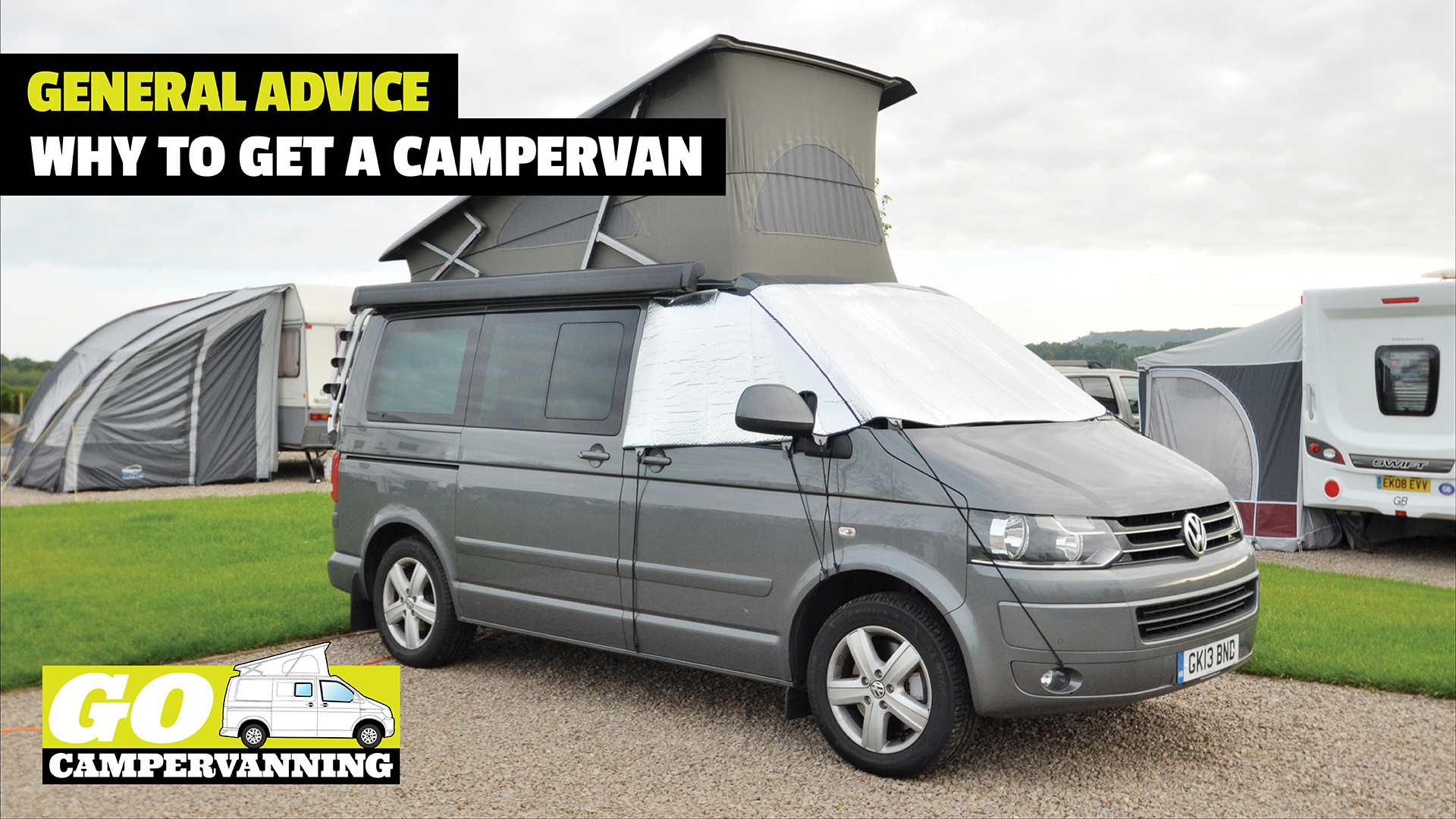
Unlike Oscar Wilde’s advice when asked about marriage (“Don’t.”), mine couldn’t be clearer when it comes to whether to take the plunge and buy yourself a campervan. Do.
I can’t really begin to explain the many joys of owning one of the best camper vans. But here goes, anyway…
Early days
I blame my parents. One early memory is of a green VW campervan. Later on came a Toyota Hiace conversion from Danbury, which was so basic by today’s standards (lots of plywood rear seating, with a two-burner hob and an inset washing-up bowl inside the tailgate).
However, it did have a radio – and my Dad put in an additional speaker for those of us sitting in the back (three brothers, one golden retriever).
This was also the first road-going vehicle that I ever drove (across a field).
By the time I reached my late 20s, living and working in London, I had saved up enough to buy my first campervan: a 1970 bay-window T2 conversion that was very much a DIY vehicle (see: the pros and cons of self-build campervans for more on this).
A memory now, and I went through the usual tribulations that ownership of such vehicles brings – replacement engine, rust and so on. But I also had some fantastic holidays, including touring in Ireland.
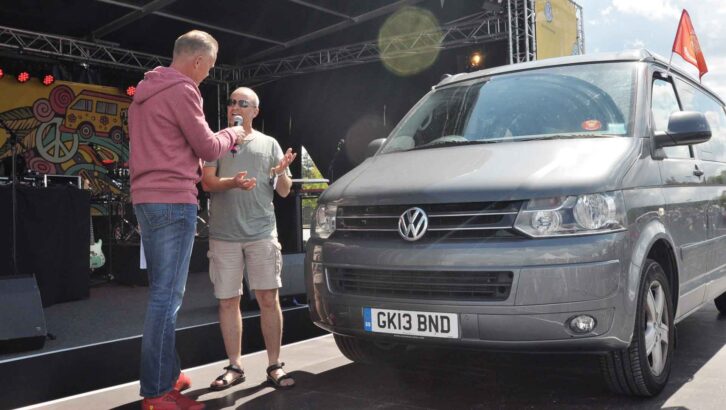
These days, I’ve reviewed hundreds, possibly thousands, of motorhomes over a journalism career that’s now going into its fourth decade.
Plenty of vehicles have impressed me over that time, but there was really only ever one that was absolutely right for me – the Volkswagen California.
Only thing was, I thought I would never be able to afford one. So, what did I do? I bought a Toyota Granvia, imported from Japan and given a new camper conversion by campervan converters Wellhouse Leisure.
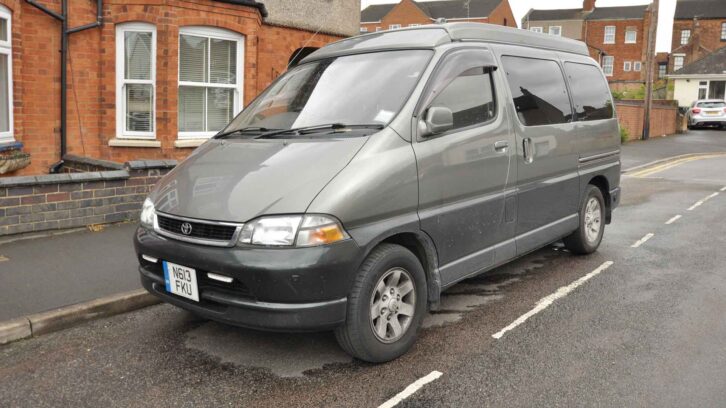
It was just £16,000, and I could have paid double that price and not got as good a vehicle. The specification included air conditioning, electric door mirrors with retracting function, front and rear parking sensors, metallic paint, alloy wheels, rear automotive heating, solar panel, DAB stereo, towbar with electrics, underseal, Webasto heater, rear tinted windows, CAT 1 immobiliser and alarm system – you get the picture.
That was back in 2011, and I was in campervan heaven. But I was brought back down to earth with a bump by my then 12-year-old daughter’s comment: “It’s good, Dad. But it’s not a VW…”
California was The One
I will never forget the day I drove it home. Less than two miles down the road and a massive smile was on my face.
I’d just shelled out a significant amount of my savings to become the third owner of a four-year-old Volkswagen California SE, in perfect (as far as I could see) order, with some lovely options. Window ticket was some £42,000, but I’d been given a favourable price for the Granvia.
I bought from VW Campersales (now Campersales) in East Sussex. Owners Rob and Zoe Williams and their team really know their stuff, especially when it comes to the Californias.

Their excellent, informative handover confirmed it all, too. I’d bought the right product from the right people.
But why a California? This is the only campervan built by Volkswagen. And the only one built to car standards. It holds its value very well, too.
Feel free to read elsewhere about the California’s electric elevating-roof, the sliding rear seat and its unique action for folding into a bed, the table on its sliding rail, the outdoor table and chairs, and a great deal more.
Someone far better with words than I am has described it as the “Swiss Army knife of campervans”. Exactly.
Added extras
I always maintain that one of the big advantages of buying nearly-new (as opposed to new) is that previous owners will usually have added some handy extras to the vehicle.
Examples here are the towbar (I’ve yet to use it), bike rack, awning and heavy-duty seat covers. That’s on top of some serious VW upgrades, including the 180PS engine and DSG automatic gearbox.
All I’ve added are exterior thermal night-time covers for the cab windows (I was never impressed by VW’s cloth interior fittings), and non-slip matting for the locker shelves.
For those of you who are interested in a review of recent VWs, take a look at what we made of the Volkswagen California Coast, a relatively compact ‘van which offers a great driving experience.
Flexibility
The California is very easy to park (I live on a street oversubscribed with parking permits). It edges just over 30mpg. I don’t feel I drive it particularly hard, but there you go – others claim far better. Mid-30s seems to be the norm.
A factory tour
In 2017, I was lucky enough to visit the Volkswagen California factory in Hanover. It has the capacity to make as many as 70 Californias per day, and that year, churned out some 12,000 models (the UK is the fifth biggest market for the California, with about 10% of the total production coming over here).
Among the many things I learnt while I was there is that the furniture unit they produce weighs about 60kg, which they reckon is around 40kg less than “traditional wood” fixtures.
For the same strength of furniture using traditional materials, Volkswagen reckons that the unit would need to be 90mm thick.
I’ve been around plenty of other motorhome and campervan production facilities. Nothing else comes close.
Buying an awning
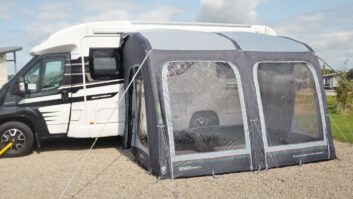
A drive-away awning will be a serious proposition if you’re thinking about owning a campervan.
Think of the best campervan awnings as the easiest way to double your living and sleeping space on-site, at the very minimum, as well as providing additional protection from the vagaries of the weather.
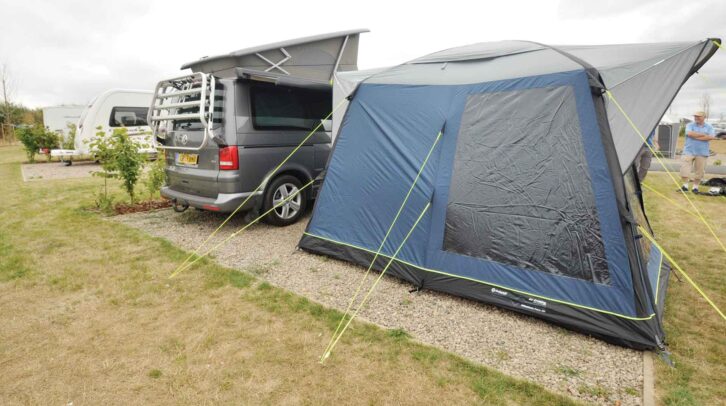
Over the years, I have also reviewed a number of awnings. I have an Outwell Milestone Pace Air (although that’s because I don’t need a bedroom) which, despite a rail on my wind-out awning, doesn’t attach directly to the vehicle (making it much easier for driving away).
My touring highlights
You really can go pretty much anywhere in a campervan, but here’s a quick list of my touring highlights.
All of Scotland (but I have a particular fondness for the islands off the west coast, especially the Outer Hebrides); all manner of weekends away; the Bulli Festival in Germany (Bulli is the pet name for the VW Transporter over there – about 1000 of them gathered together for the festival experience and I turned out to be the only British-registered vehicle on site).
And then there are the wonderful music events. Which dedicated camper owners don’t take off for weekends camping at music festivals?
Not tried it? You should. I’ve done more than my share, but Wychwood – held at Cheltenham Racecourse in late May/early June – is one that I keep going back to.
A quick call-out for Pembrokeshire, too, as being particularly dog-friendly. We went there twice last year.
My dog, Bonnie, sleeps on the swivelled cab passenger seat (this is her usual travel location, too, clipped in to the seatbelt buckle). I switch between the roof bed and downstairs.
The downsides
Yes, there are downsides. There will be times when you wish you just had a car. Not many. Only occasionally.
As far as the California is concerned, this is pretty much a one-size-fits-all product, albeit with a long list of appealing optional extras to choose from.
For fun, go to the California section and list a spec for the vehicle of your dreams.
Corrosion of the aluminium roof is a common problem – bubbling paintwork on the front leading edge can be the first sign of this issue.
VW Van Centres will do a superbly professional job servicing and repairing your California – but their theme seems to be to bring your vehicle back to peak perfection. You pay the price.
Oh, and last but not least, I do find that a few Volkswagen California owners can be just a bit snobbish about their ’van, compared to other VW-based campers.
I merely consider myself lucky enough to a) have been in a position to afford a Volkswagen California, and b) to be able to make the most of it all.
After some more advice for getting the most from campervanning? Then head to our Go Campervanning: General Advice section for more great ideas!
If you’ve enjoyed reading this article, why not get the latest news, reviews and features delivered direct to your door or inbox every month. Take advantage of our brilliant Practical Motorhome magazine SUBSCRIBERS’ OFFER and SIGN UP TO OUR NEWSLETTER for regular weekly updates on all things motorhome related.